
EconomyLens.com
No Result
View All Result
Thursday, March 5, 2026
  • Home
  • Economy
  • Business
  • Markets
  • Tech
  • Editorials
EconomyLens.com
  • Home
  • Economy
  • Business
  • Markets
  • Tech
  • Editorials
No Result
View All Result
EconomyLens.com
No Result
View All Result
Home Tech

US allows Nvidia to send advanced AI chips to China with restrictions

David Peterson by David Peterson
January 14, 2026
in Tech
Reading Time: 6 mins read
A A
3
25
SHARES
317
VIEWS
Share on FacebookShare on Twitter

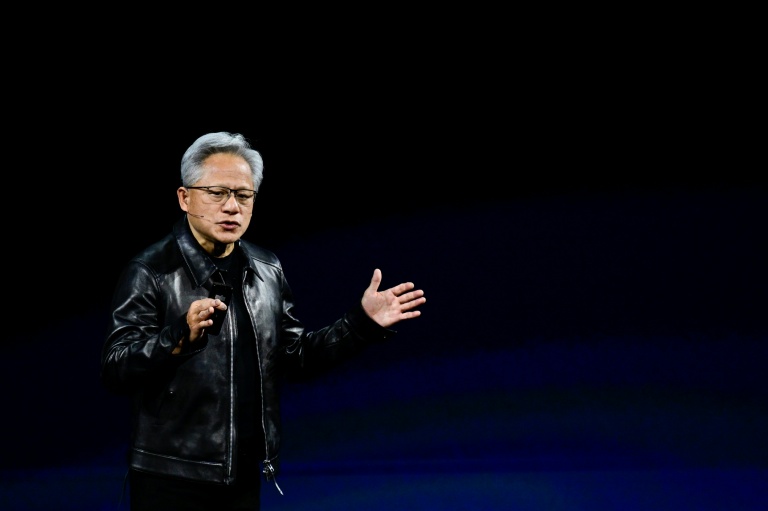
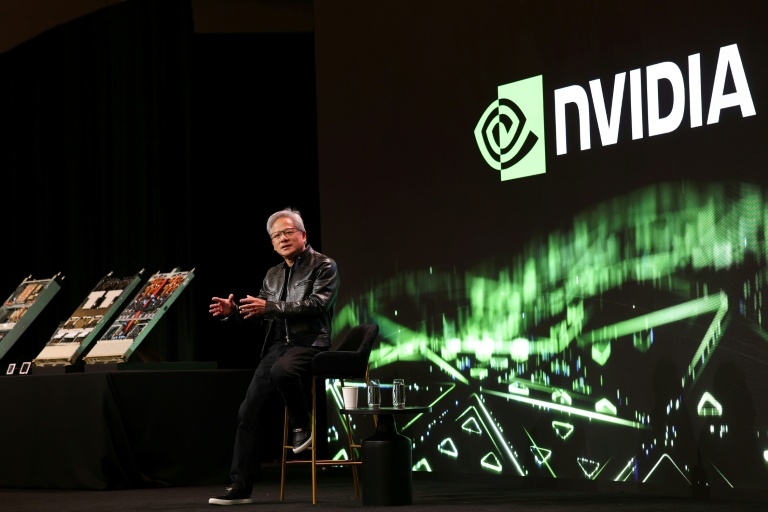
Nvidia chief executive Jensen Huang has advocated for selling some advanced chips in China, arguing global AI systems should be built on US technology. ©AFP

San Francisco (United States) (AFP) – The US Commerce Department on Tuesday opened the door for Nvidia to sell advanced artificial intelligence chips in China with restrictions, following through on a policy shift announced last month by President Donald Trump. The change would permit Nvidia to sell its powerful H200 chip to Chinese buyers if certain conditions are met — including proof of “sufficient” US supply — while sales of its most advanced processors would still be blocked.

Related

Florida family sues Google after AI chatbot allegedly coached suicide

Florida family sues Google after AI chatbot allegedly coached suicide

Can Anthropic survive taking on Trump’s Pentagon?

Middle East fighting overshadows world telecom show

OpenAI strikes Pentagon deal with ‘safeguards’ as Trump dumps Anthropic

However, uncertainty has grown over how much demand there will be from Chinese companies, as Beijing has reportedly been encouraging tech companies to use homegrown chips. Chinese officials have informed some firms they would only approve buying H200 chips under special circumstances, such as development labs or university research, news website The Information reported Tuesday, citing people with knowledge of the situation. The Information had previously reported that Chinese officials were calling on companies there to pause H200 purchases while they deliberated requiring them to buy a certain ratio of AI chips made by Nvidia rivals in China.

In its official update on Tuesday, the US Commerce Department’s Bureau of Industry and Security said it had changed the licensing review policy for H200 and similar chips from a presumption of denial to handling applications case-by-case. Trump announced in December an agreement with Chinese President Xi Jinping to allow Nvidia to export its H200 chips to China, with the US government getting a 25-percent cut of sales. The move marked a significant shift in US export policy for advanced AI chips, which Joe Biden’s administration had heavily restricted over national security concerns about Chinese military applications. Democrats in Congress have criticized the move as a huge mistake that will help China’s military and economy.

Nvidia chief executive Jensen Huang has advocated for the company to be allowed to sell some of its more advanced chips in China, arguing the importance of AI systems around the world being built on US technology. The chips — graphic processing units or GPUs — are used to train the AI models that are the bedrock of the generative AI revolution launched with the release of ChatGPT in 2022. The GPU sector is dominated by Nvidia, now the world’s most valuable company thanks to frenzied global demand and optimism for AI. H200s are roughly 18 months behind the US company’s most state-of-the-art offerings, which will still be off-limits to China.

Nvidia’s Huang has repeatedly warned that China is just “nanoseconds behind” the United States as it accelerates the development of domestically produced advanced chips. On Wednesday, leading Chinese AI startup Zhipu said it had used homegrown Huawei chips to train its new image generator. Zhipu AI described its tool as “the first state-of-the-art multimodal model to complete the entire training process on a domestically produced chip”. The startup went public in Hong Kong last week and its shares have since soared 75 percent — one of several dazzling recent initial public offerings by Chinese chip and generative AI companies, as high hopes for the sector outweigh concerns of a potential market crash.

© 2024 AFP

Tags: artificial intelligenceNvidiaUS-China relations
Share10Tweet6Share2Pin2Send
Previous Post

Boeing annual orders top Airbus for first time since 2018

Next Post

Asian markets mixed, Tokyo up on election speculation

David Peterson

David Peterson

Related Posts

Tech

Trump tells US govt to ‘immediately’ stop using Anthropic AI tech

February 27, 2026
Tech

Carmaker BMW to trial humanoid robots at German factory

February 27, 2026
Tech

OpenAI raises $110 bn in record funding round

February 27, 2026
Tech

Texas at heart of Amazon’s AI push in United States

February 28, 2026
Tech

Tech sovereignty push to meet AI fever at Mobile World Congress

February 26, 2026
Tech

Australian supermarket giant reins in AI assistant claiming to be human

February 26, 2026
Next Post

Asian markets mixed, Tokyo up on election speculation

China's trade surplus hit record $1.2 trillion in 2025

Asian markets mostly up with politics bump for Tokyo

Luxury retailer Saks Global files for bankruptcy

0 0 votes
Article Rating
Subscribe
Notify of
guest
guest
3 Comments
Oldest
Newest Most Voted
Inline Feedbacks
View all comments
  • Trending
  • Comments
  • Latest

New York ruling deals Trump business a major blow

September 30, 2024

Elon Musk’s X fights Australian watchdog over church stabbing posts

April 21, 2024

Women journalists bear the brunt of cyberbullying

April 22, 2024

France probes TotalEnergies over 2021 Mozambique attack

May 6, 2024

New York ruling deals Trump business a major blow

81

Ghanaian finance ministry warns against fallout from anti-LGBTQ law

74

Shady bleaching jabs fuel health fears, scams in W. Africa

71

Stock markets waver, oil prices edge up

65

Union loses fight against Tesla at German factory

March 5, 2026

Oil prices rise, stocks drop as Middle East war stirs supply concerns

March 5, 2026

Middle East war spirals with fresh strikes on Iran, Gulf

March 5, 2026

Middle East war spirals as Iran hits Kurds in Iraq

March 5, 2026
EconomyLens Logo

We bring the world economy to you. Get the latest news and insights on the global economy, from trade and finance to technology and innovation.

Pages

  • Home
  • About Us
  • Privacy Policy
  • Contact Us

Categories

  • Business
  • Economy
  • Markets
  • Tech
  • Editorials

Network

  • Coolinarco.com
  • CasualSelf.com
  • Fit.CasualSelf.com
  • Sport.CasualSelf.com
  • SportBeep.com
  • MachinaSphere.com
  • MagnifyPost.com
  • TodayAiNews.com
  • VideosArena.com
© 2025 EconomyLens.com - Top economic news from around the world.
No Result
View All Result
  • Home
  • Economy
  • Business
  • Markets
  • Tech
  • Editorials

© 2024 EconomyLens.com - Top economic news from around the world.