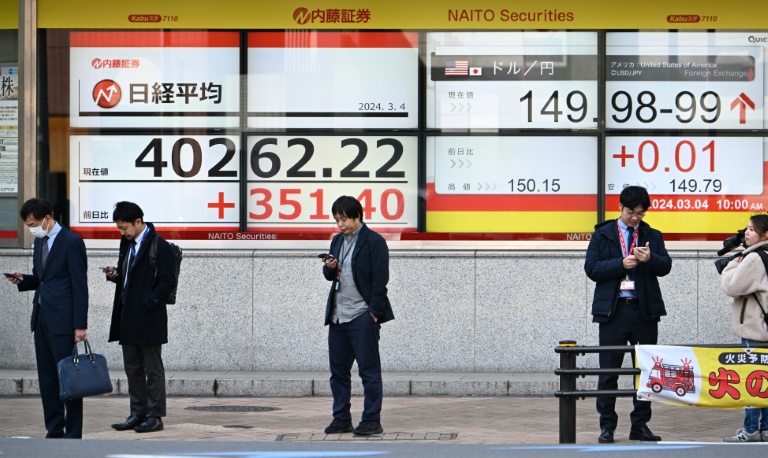

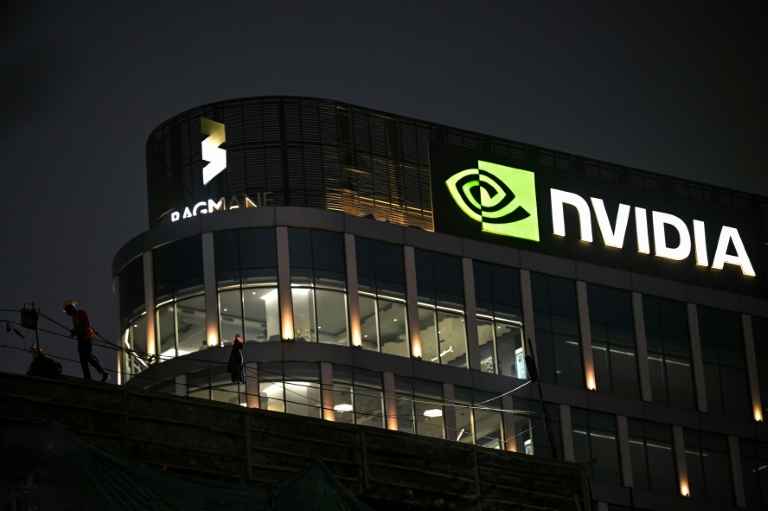
Hong Kong (AFP) – Seoul’s Kospi index hit another record high Thursday on a mixed day for Asian equities following a strong lead from Wall Street, but traders gave a tepid response to forecast-beating earnings from chip titan Nvidia. Tech firms in the region have enjoyed a blockbuster start to the year as investors reassess their AI bets, with attention turning to “upstream” firms such as chipmakers and away from Wall Street’s “downstream” companies that run apps and software.
The shift has come amid growing concerns about the hundreds of billions of dollars pumped into artificial intelligence and when that will see a return, while a slew of new tools has raised fears the technology will disrupt other businesses. Still, South Korea’s Kospi climbed two percent to a fresh peak Thursday, a day after breaking 6,000 points for the first time, led again by chipmakers Samsung and SK hynix.
Tokyo also hit a new record, while Sydney, Wellington, Manila, and Jakarta also enjoyed buying. Hong Kong, Shanghai, Singapore, and Taipei edged down. While the mood remains upbeat, sentiment was tempered by disappointment over Nvidia’s earnings, despite posting record revenue of $68.1 billion in October-December, thanks to insatiable demand for its AI chips. It also forecast first-quarter revenue of between $76.4 billion and $79.6 billion, far above estimates of $72.8 billion.
Shares in the firm—which last year became the first to top $5 trillion in market capitalisation—dipped in after-hours trade in New York, with analysts saying expectations had become almost impossible to meet. “There was a time when beating the number was enough. Now you have to beat the whisper, crush the dream, and torch the most optimistic sell-side spreadsheet in Silicon Valley just to keep the tape happy,” wrote SPI Asset Management’s Stephen Innes.
“On paper, this was another thunderclap quarter. And yet the stock dipped. The market is no longer pricing growth. It is pricing perpetuity.” Charu Chanana at Saxo said, “We’ve moved from Phase One, where (capital expenditure) automatically meant upside for the entire ecosystem, to Phase Two, where investors want proof of monetisation and spending discipline. The key question is no longer ‘who can spend the most’, but ‘who can turn that spend into durable profits.'” That’s why AI volatility can continue even after a big Nvidia beat.
Futures in all three main indexes on Wall Street were in the red after they had enjoyed a strong run-up Wednesday. On currency markets, the yen clawed back some losses against the dollar that came after it emerged that Japanese Prime Minister Sanae Takaichi had nominated two academics to the Bank of Japan board who are considered policy doves. That came after reports had earlier said she had told the central bank’s boss Kazuo Ueda of her concern about hiking interest rates further.
– Key figures at around 0230 GMT –
Tokyo – Nikkei 225: UP 0.5 percent at 58,856.98 (break)
Hong Kong – Hang Seng Index: DOWN 0.5 percent at 26,644.06
Shanghai – Composite: DOWN 0.1 percent at 4,141.41
Dollar/yen: DOWN at 155.84 yen from 156.46 yen on Wednesday
Euro/dollar: UP at $1.1825 from $1.1805
Pound/dollar: UP at $1.3569 from $1.3554
Euro/pound: UP at 87.15 pence from 87.10 pence
West Texas Intermediate: UP 0.3 percent at $65.63 per barrel
Brent North Sea Crude: UP 0.4 percent at $71.10 per barrel
New York – Dow: UP 0.6 percent at 49,482.15 (close)
London – FTSE 100: UP 1.2 percent at 10,806.41 (close)
© 2024 AFP