
**London (AFP)** – Here are the latest key facts about impacts from the blockage of the Strait of Hormuz, a crucial shipping route virtually paralysed by the Middle East war. Around a fifth of global crude oil and liquefied natural gas (LNG) passes through the waterway in peacetime. The war erupted on February 28 when the United States and Israel began bombing Iran, prompting Tehran to retaliate with strikes across the region and restrict access to the strait.
**LNG tankers U-turn**
Two LNG tankers carrying Qatari gas turned around after attempting to cross the strait eastward on Monday morning. They would have been the first laden LNG carriers to exit the Gulf since the start of the war. An empty LNG tanker co-owned by Omani and Japanese shipping companies crossed the strait last week. Kpler data shows that 19 LNG tankers are currently in the Gulf.
**Still few crossings**
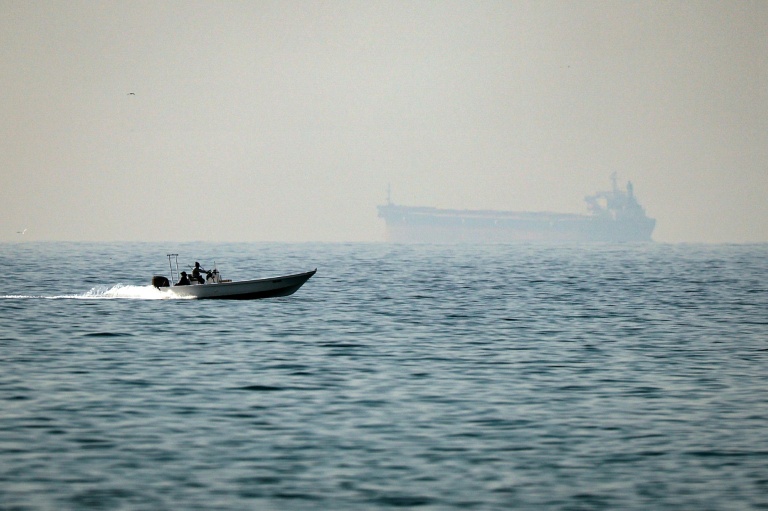
Since March 1, commodities carriers have made 293 crossings, according to Kpler data, a 94-percent decrease from peacetime traffic. Of these, 189 were made by oil tankers and gas carriers, and most were travelling east towards the Gulf of Oman. Six out of 10 crossings involved ships coming from or heading to Iran. The other main countries involved in recent days were the United Arab Emirates, India, China, and Oman. A cargo ship owned by French shipping giant CMA CGM crossed the waterway on Thursday, making it the first known transit by a major European shipping group since March 1. Three Japan-linked ships have also exited the Gulf through the Strait of Hormuz since Thursday. The channel in peacetime sees around 120 daily transits, according to Lloyd’s List, a shipping industry intelligence site.
**29 ships targeted**
Four incidents involving ships, including two claimed by Iran’s Revolutionary Guards, have been reported since Saturday. The latest incident reported on Tuesday morning involved a container vessel near Iran’s Kish Island that was struck by an “unknown projectile which has caused damage above the waterline,” according to British marine security agency UK Maritime Trade Operations (UKMTO). In total, 29 commercial ships, including 13 tankers, have been attacked or reported incidents since March 1 in the Gulf, the Strait of Hormuz, or the Gulf of Oman, according to UKMTO and Vanguard Tech.
**11 sea workers killed**
Since the conflict began, at least 11 seafarers or dock workers have died in incidents in the region, according to the International Maritime Organization (IMO). One sea worker is also missing, and ten others are injured, the IMO said.
**Iran-approved route**
Apart from three Omani tankers that passed through the strait last week near Oman’s shore, recent crossings appeared to have used a different, Iranian-approved route just off the country’s coast. Kpler data shows that all ships crossing with their transponders on since Friday passed through that route near Larak Island, which Lloyd’s List has dubbed the “Tehran Toll Booth.” Lloyd’s List analyst Bridget Diakun said last week that there had been at least two cases of shippers paying Iran for permission to pass, while others may have been gaining passage through “diplomatic negotiations.” The Revolutionary Guards said the route was closed to vessels travelling to and from ports linked to Iran’s “enemies.”
**Over 2,000 ships in Gulf**
Bloomberg data showed Tuesday that 2,268 vessels sent transponder signals in the Gulf west of the Strait of Hormuz over the past day, including 47 very large crude carriers and nine very large gas carriers.
**Sanctioned ships**
Since the war started, 49 percent of the crossings have been by ships under US, EU, or UK sanctions, according to an AFP analysis of passage data. Of the crossings by oil and gas tankers, 65 percent were by vessels under sanctions.
© 2024 AFP