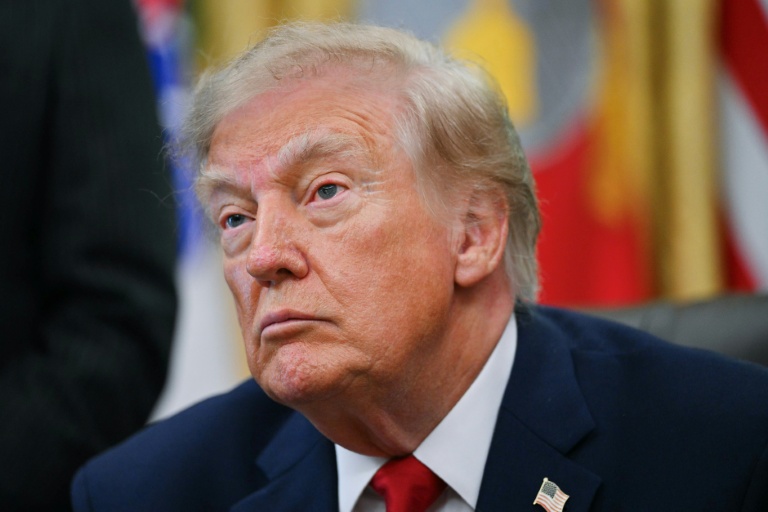


Hong Kong (AFP) – Oil prices climbed and most stocks fell Thursday on fears over the nascent US-Iran ceasefire after Tehran threatened to resume hostilities as Israel launched a major bombardment of Lebanon. Equity markets across the globe soared and crude plunged Wednesday after US President Donald Trump announced the two-week halt in the war, and the Islamic republic said it would reopen the Strait of Hormuz as peace talks took place.
But with the deal less than a day old, cracks were already appearing as Tel Aviv said it did not include Israel’s fight against Iran-backed Hezbollah in Lebanon as it continued attacks on its northern neighbour. That view was echoed by Vice President JD Vance, who said: “If Iran wants to let this negotiation fall apart…over Lebanon, which has nothing to do with them, and which the United States never once said was part of the ceasefire, that’s ultimately their choice.”
Iran said that broke terms of the deal as reports indicated the vital Hormuz waterway – through which a fifth of world oil and gas passes – was shut again. However, that came as Tehran announced alternative routes for ships travelling through the Strait, citing the risk of sea mines. The country’s parliament speaker Mohammad Bagher Ghalibaf posted on X that the “workable basis on which to negotiate” had already been violated, making further talks “unreasonable.” He listed three alleged US violations of the truce plan: the continued attacks in Lebanon, a drone entering Iranian airspace, and a denial of the country’s right to enrichment.
Hezbollah said Thursday it had fired rockets towards Israel in response to its “violation,” while UN boss Antonio Guterres warned Israel’s strikes on Lebanon posed a “grave risk” to the truce. Trump said on social media late Wednesday that US forces deployed near Iran would remain stationed in the area “until such time as the REAL AGREEMENT reached is fully complied with.” Meanwhile, a senior US official said Tehran’s 10-point plan was not the same set of conditions the White House had agreed to.
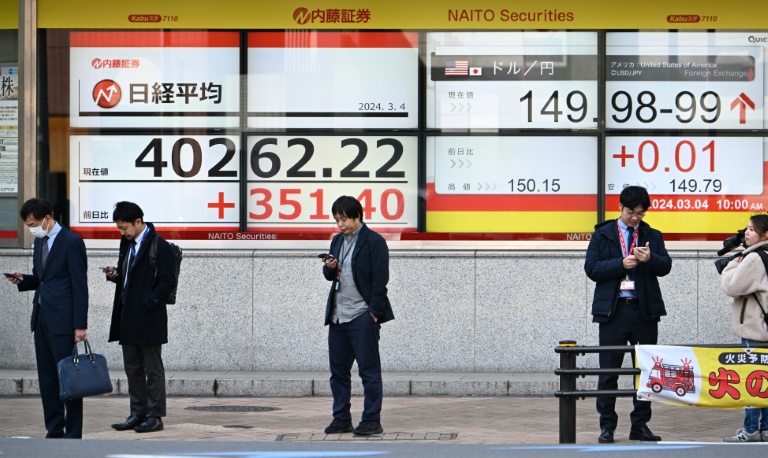
Fears that the ceasefire could fall apart while crude remained stuck in Hormuz saw both main crude contracts rise more than three percent, following sharp losses on Wednesday. Most equities also gave up some of their gains. Tokyo, Hong Kong, Shanghai, Singapore, Seoul, and Mumbai were all down, though there were gains for Sydney, Taipei, Bangkok, and Wellington. London, Paris, and Frankfurt fell in the morning, with US futures also in negative territory.
Attention is also turning to crunch talks in Pakistan that are expected on Friday or Saturday, with Vance leading the US delegation. “Many questions remain with the 10-point plan that Trump has received from Iran (which includes Iranian control of the Strait of Hormuz, US acceptance of Iran’s uranium enrichment programme, the end of all sanctions, and withdrawal of the US military from the Gulf region) at odds with Trump’s 15-point peace plan,” wrote National Australia Bank’s Skye Masters.
Still, observers warned that an end to the conflict would not see a quick return to normal. “It should also be noted that there has been significant damage to infrastructure in some major energy exporters,” said Anthony Kettle at RBC BlueBay Asset Management. “Even if the ceasefire holds it will take time for energy exports from the region to return to more normalized levels, so there will be an impact on growth and inflation that is still difficult to ascertain.”
Still, FOREX.com analyst Fawad Razaqzada said: “Investors are confident that oil prices could ease further and the Strait of Hormuz will re-open again and hopefully stay open beyond the two-week ceasefire period.”
**Key figures at around 0810 GMT**
– West Texas Intermediate: UP 3.1 percent at $97.32 a barrel
– Brent North Sea Crude: UP 3.3 percent at $97.87 a barrel
– Tokyo – Nikkei 225: DOWN 0.7 percent at 55,895.32 (close)
– Hong Kong – Hang Seng Index: DOWN 0.5 percent at 25,752.40 (close)
– Shanghai – Composite: DOWN 0.7 percent at 3,966.17 (close)
– London – FTSE 100: DOWN 0.2 percent at 10,591.02
– Euro/dollar: DOWN at $1.1660 from $1.1667 on Wednesday
– Pound/dollar: DOWN at $1.3393 from $1.3405
– Dollar/yen: UP at 158.92 yen from 158.35 yen
– Euro/pound: DOWN at 87.07 pence from 87.22 pence
© 2024 AFP