
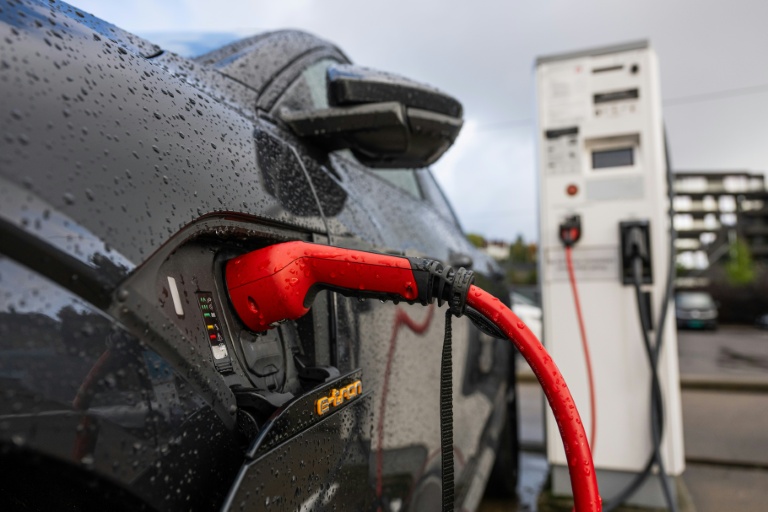
Paris (France) (AFP) – Sales of new cars jumped last month in the European Union as consumers turned to electric vehicles amidst soaring petrol prices due to the war in the Middle East, data showed Thursday.
Overall sales rose 12.5 percent in March from the same month last year, reaching 1.16 million vehicles, according to registration data from the European Automobile Manufacturers’ Association (ACEA). This jump helped the market attain a four percent rise for the first quarter overall, following declines in January and February.
Sales of fully electric vehicles soared by 49 percent, with plug-in hybrids also experiencing a significant increase of 20 percent. Over the first quarter, hybrids emerged as the top choice for European consumers, accounting for 37 percent of overall sales. Plug-in hybrids contributed an additional 10 percent to market share. In contrast, the market share of simple petrol motor vehicles slumped to 23 percent in the quarter, down from 28 percent a year earlier. Fully electric vehicles made up just over 19 percent of overall sales.
The ACEA noted that the sales performance of electric vehicles varied significantly by country, with Italy, France, and Germany posting strong gains. Conversely, sales in Belgium and the Netherlands fell during this period.
Petrol prices spiked throughout Europe after the United States and Israel attacked Iran on February 28, resulting in a near-block on oil exports from the Gulf and prompting Iran to retaliate by attacking energy facilities in the region.
Meanwhile, the Volkswagen group maintained its top position in the EU market in the first quarter, despite its market share dipping to 26.4 percent, even as sales edged higher. This was largely influenced by Stellantis, whose Fiat, Citroen, and Opel brands saw sales surge, thereby boosting the group’s market share.
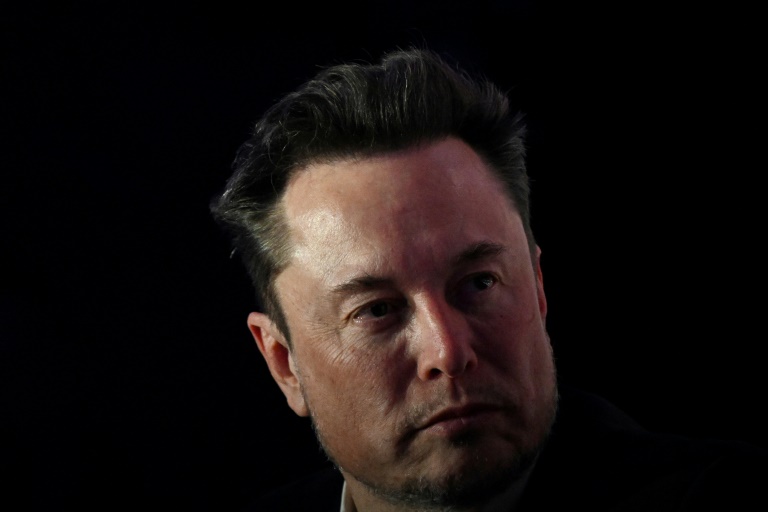
Another major European car manufacturer, Renault, experienced a decline in sales during the first quarter due to transportation problems affecting its low-cost Dacia brand. Notably, sales of Teslas jumped nearly 60 percent compared to the first quarter of last year, when Elon Musk’s involvement in the Trump administration had deterred European consumers.
© 2024 AFP