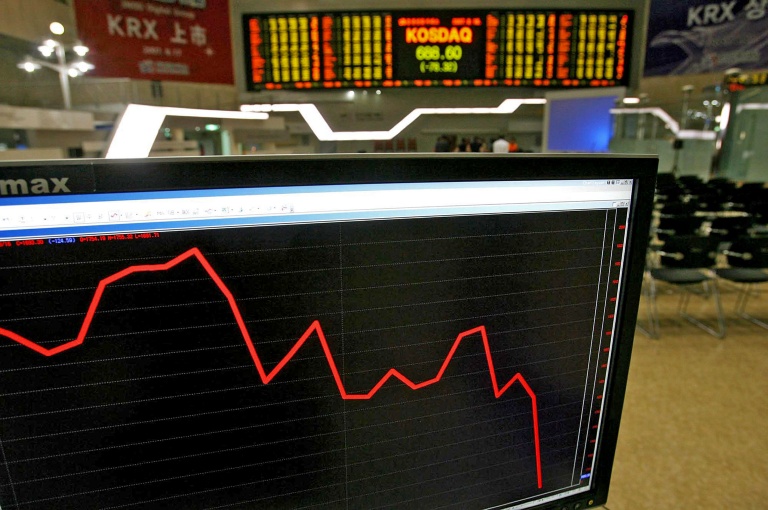

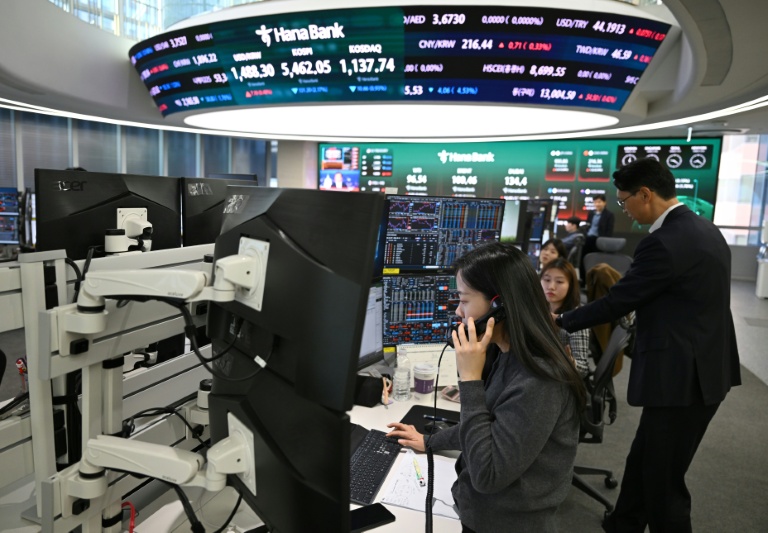
Tokyo (AFP) – Technology shares helped Asian stock markets rebound on Tuesday, while oil prices eased slightly even as Iran targeted US radar and air defense installations in the Gulf. Tech stocks dived in recent sessions on ongoing fears of excessive valuations in the artificial intelligence (AI) sector, with chipmakers leading the rout.
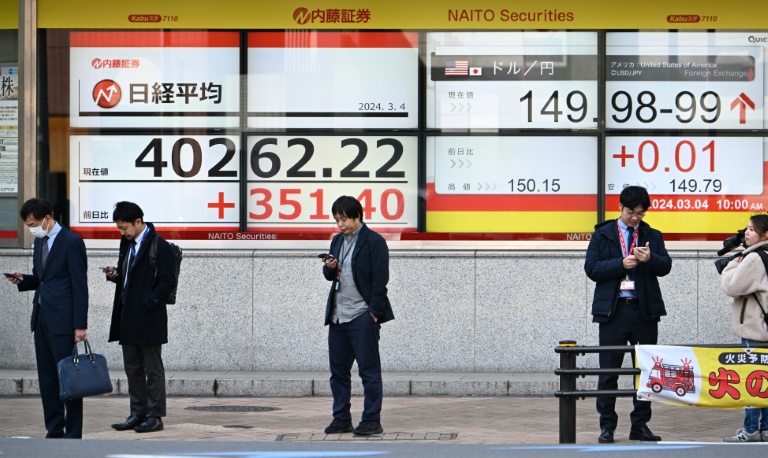
But on Monday, the Nasdaq advanced, and this was mirrored in Asia, helping Tokyo rise more than three percent, Seoul 3.6 percent, and Shanghai almost two percent. Europe also eked out early modest gains, with Frankfurt inching up 0.2 percent and Paris up 0.1 percent, but London off 0.1 percent.
Stephen Innes of SPI Asset Management cautioned, however, that the tech rebound did not appear to be driven by “a decisive improvement in the AI fundamentals.” “Big Tech earnings now need to prove that AI revenues, margins and cash flow can justify the scale” of the huge investments in AI infrastructure, Innes said. Earnings season for the sector kicks off in the coming days with results from Tesla and Alphabet, followed by Microsoft, Meta, Apple, and Amazon next week.
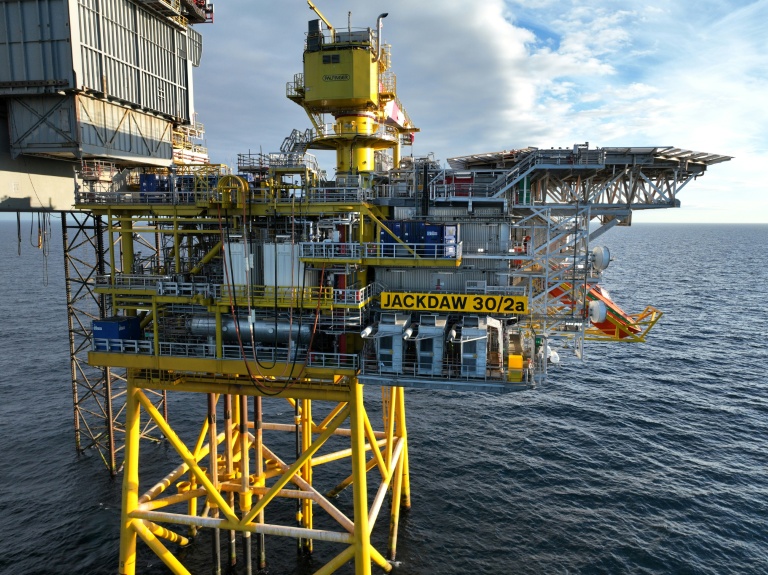
Oil prices had risen Monday after fresh fighting over the weekend in the Middle East, with President Donald Trump saying Iran would pay “many times over” after the deaths of three more American soldiers. The US launched a new round of attacks late Monday which it said were “designed to further degrade Iranian military capabilities used to attack commercial shipping” in the Strait of Hormuz.
Hours later, the Iranian army said it had targeted US assets in Kuwait and Bahrain, including air defense systems, radar installations, and administrative buildings. Iran’s Yemeni allies, the Houthi rebels, also said Monday they would blockade Saudi ports, putting at risk Riyadh’s ability to bypass the Strait of Hormuz for some of its oil exports. “In practice, we think even if there were disruptions it is unlikely to be sustained given the lack of capability right now by the Houthis to do so and also differentiate which are Saudi-linked ships or not,” said Michael Wan at MUFG.
“All-in from a market perspective we think it’s still a reasonable base case that there is resolution in the conflict, even if things may get worse before it gets better,” Wan said. Trump, meanwhile, signed orders to impose new 50-percent tariffs on many Canadian goods, claiming “discriminatory treatment” against American alcohol, automobile, and dairy products.
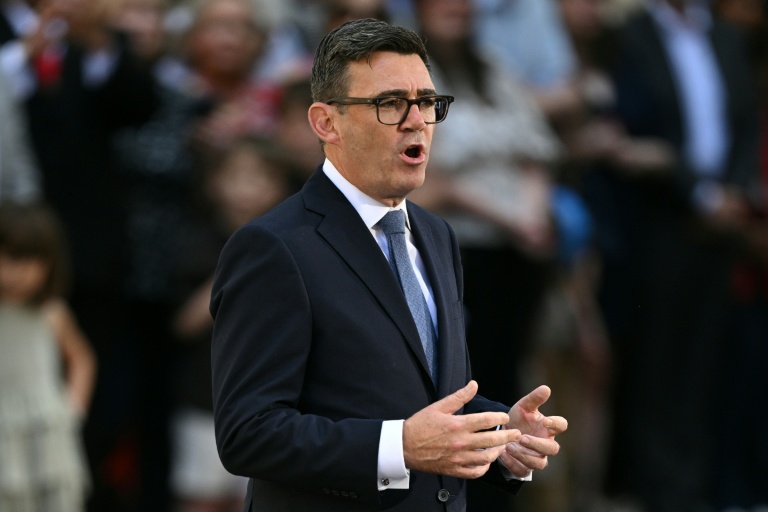
Investors were watching British bond yields after new Prime Minister Andy Burnham — taking on stretched public finances — said he would remove tax on household electricity bills. Official data Tuesday, however, showed that UK government borrowing dropped more than expected in June.
In Asia, US Secretary of State Marco Rubio condemned “dangerous and aggressive actions” by China following a clash with the Philippine navy in the South China Sea, as he arrived for an ASEAN foreign ministers’ meeting.
– Key figures around 0800 GMT –
West Texas Intermediate: DOWN 0.6 percent at $82.71 per barrel
Brent North Sea Crude: DOWN 0.8 percent at $88.47
Tokyo – Nikkei 225: UP 3.26 percent at 65,232.19 (CLOSE)
Hong Kong – Hang Seng Index: DOWN 0.06 percent at 25,128.14
Shanghai – Composite: UP 1.79 percent at 3,864.37 (CLOSE)
Pound/dollar: UP at $1.3441 from $1.3438 on Monday
Euro/pound: UP at 84.98 pence from 84.95 pence
Euro/dollar: UP at $1.1423 from $1.1416
Dollar/yen: UP at 162.61 yen from 162.48 yen
© 2024 AFP