
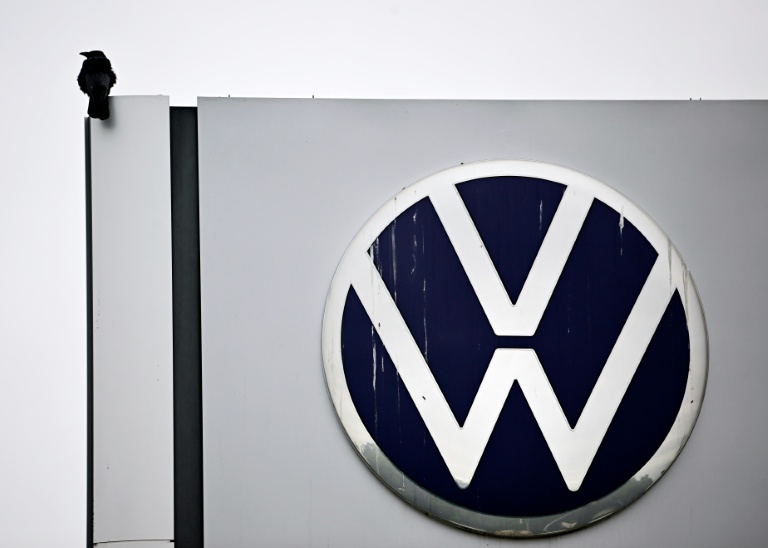
Frankfurt (Germany) (AFP) – Volkswagen said Friday that its net profit plunged in the second quarter as the crisis-hit carmaker weighs up to 100,000 job cuts worldwide, grappling with increasing competition in and from China. Net profit for the three months to the end of June came in at 1.54 billion euros ($1.75 billion), the 10-brand group reported, a fall of 32.9 percent compared to the same period last year. Last year’s figure was itself a decline of almost 37 percent on 2024.
The result was impacted by a 500-million-euro charge the carmaker booked for halting US production of its electric ID.4, Volkswagen stated, as well as “negative mix effects,” indicating that the automotive giant sold more lower-margin products. The firm, which in addition to its own brand includes the likes of Lamborghini, Audi, Skoda, and Porsche, also cut its guidance for the year and now anticipates sales to remain flat or fall by up to three percent. It had previously expected growth of up to three percent.
These results add pressure on the beleaguered group, which has been suffering from slimmer margins from the sales of electric cars, US tariffs, and, above all, intense Chinese competition. “We must accelerate efforts to structurally lower our cost base and sustainably improve our earnings quality,” Volkswagen finance chief Arno Antlitz said. “What matters now is swift and consistent implementation.”
Like other German carmakers, Volkswagen has suffered from years of declining sales in China, the world’s largest market, burdened by fierce competition from local rivals and muted demand given China’s sluggish domestic economy. Volkswagen’s vehicle deliveries in the country last year were already at their lowest level since 2011, and they fell a further 31.6 percent in the first six months of the year, the firm reported.
Pressure to cut costs has intensified as Chinese brands have sought to export to escape cut-throat competition at home, threatening European carmakers on their home turf. Brands such as BYD, Geely, and Chery captured almost 11 percent of the European car market in May, according to automotive intelligence firm Dataforce, up from just under three percent three years ago.
Volkswagen CEO Oliver Blume informed staff earlier this month that four plants could close, and a further 50,000 jobs might need to be eliminated on top of the 50,000 departures that have already been agreed across the group. If the restructuring proceeds, it would represent the largest in the history of the automotive industry, surpassing the 50,000 job cuts General Motors made after it declared bankruptcy in 2009.
Any overhaul is likely to be contentious. Labour representatives and the German state of Lower Saxony, who both oppose plant closures, together hold more than half the seats on the supervisory board. Lower Saxony is a shareholder in the Volkswagen Group and holds 20 percent of the voting rights, in addition to hosting six Volkswagen plants. Discussions in 2024 regarding potential plant closures resulted in an agreement with unions that ruled out factory closures and compulsory redundancies until 2030 as part of a deal that would see 35,000 jobs go at the Volkswagen brand in Germany by the end of the decade.
© 2024 AFP