
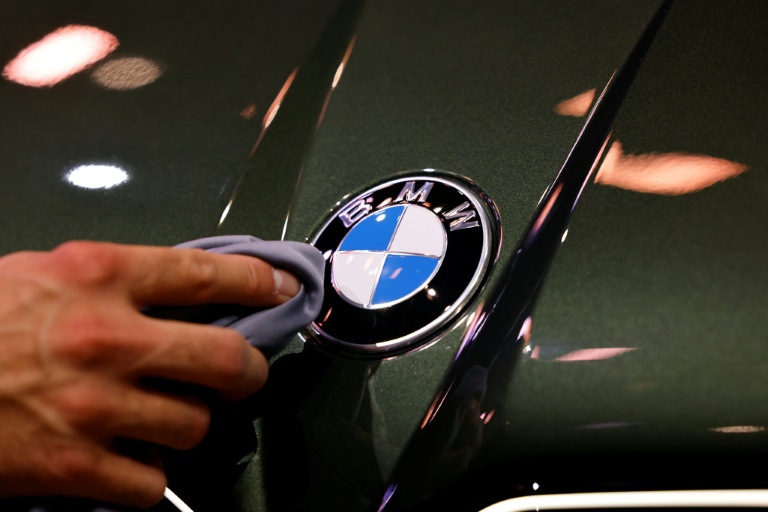
Frankfurt (Germany) (AFP) – Premium carmaker BMW is to offer almost half its German staff voluntary redundancy in a bid to cut 8,000 jobs by the end of 2027, a company source told AFP Wednesday. About 40,000 of BMW’s roughly 85,000 permanent German employees would receive the offers from October, the source said, adding that production line workers would be spared the cuts. “The workforce will ultimately be reduced by around 8,000 people by the end of 2027,” the source said. “We’re planning on the basis of that.”
BMW employs about 154,000 people worldwide and the offer would be open to German employees in desk-based roles, the source said. The plan had taken about six weeks to negotiate between the board and BMW’s works council, the source added. Suffering from slimmer margins on electric cars, US tariffs, and above all intense Chinese competition, German carmakers have sought to cut overheads. Volkswagen is weighing up to 100,000 job cuts across its 10 brands while Mercedes-Benz has its own voluntary redundancy program.
A BMW employee present at a staff meeting announcing the plans said the carmaker’s CEO had called the situation critical, partly blaming European regulations that force the sale of electric cars despite patchy demand, as well as increasing tariff barriers around the world. “We are talking about a substantial change to the rules of the game,” CEO Milan Nedeljkovic told staff. “That is also a consequence of political mandates that are out of step with the market.” “Neither the protectionism nor far-reaching changes in the market are going to disappear,” he added. BMW’s press office confirmed a restructuring plan for the company’s white-collar workers, but would not provide any figures.
– Trouble in China – Deciding early on to maintain petrol and diesel options for its customers, BMW has so far been widely seen to have weathered the storm better than its peers, avoiding costly strategy changes at the same time as seeing its electric sales rise. But the carmaker issued a shock profit warning last month, saying that business in China was proving even worse than expected amid fierce competition and a sluggish economy. BMW’s vehicle deliveries in China were last year already at their lowest level since 2017 and they fell 30 percent year-on-year in the three months to June.
“BMW is now responding to the slump in the Chinese market whilst simultaneously working to strengthen the competitiveness of its German sites,” said Horst Ott, head of the Bavarian branch of the powerful IG Metall union, who sits on BMW’s supervisory board under a German system giving labour representatives half the seats. But he warned that “provisions under collective bargaining agreements are non-negotiable. The company is also making use of natural staff turnover.”
– ‘Immense’ pressure – The redundancy program is expected to meaningfully reduce BMW’s costs by 2028, the source said, with the bulk of departures coming next year. Cutting its profit outlook last month to a margin potentially as low as one percent at its cars business, BMW said restructuring measures would cost it in the second half of 2026. The costs this year would probably run into the hundreds of millions, the source said, adding that the exact figure was uncertain and depended on uptake.
The news throws a spotlight on the woes of Germany’s crucial automotive sector. Industrial companies in Germany last year cut 124,000 jobs, according to consultancy EY, about double the figure for 2024, and losses were concentrated in the automotive sector. BMW last year opened a new plant in lower-cost Hungary and Mercedes-Benz earlier this month unveiled an extension to its Kecskemet plant in the same country that more than doubled its size, making it the firm’s largest in Europe.
Mercedes-Benz CEO Ola Kaellenius, speaking to reporters and investors at the carmaker’s financial results presented Tuesday, said that given international competition, the German car industry needed to do more with less. “The whole sector could benefit from improved productivity, no two ways about it,” he said. “The pressure is immense.” BMW is due to announce first half earnings Thursday.
© 2024 AFP