
New York (AFP) – US petroleum giants ExxonMobil and Chevron released blowout profits on Friday due to the Middle East war, as executives cautioned that elevated gasoline prices will probably continue to strain consumers. The US oil giants scored huge profit increases, illustrating that the financial benefits from supply disruptions from the US-Iran war easily offset negative effects at both companies. ExxonMobil’s second-quarter profits more than doubled to $14.5 billion, while Chevron’s came in at $12.1 billion, more than five times the level in the year-ago quarter.
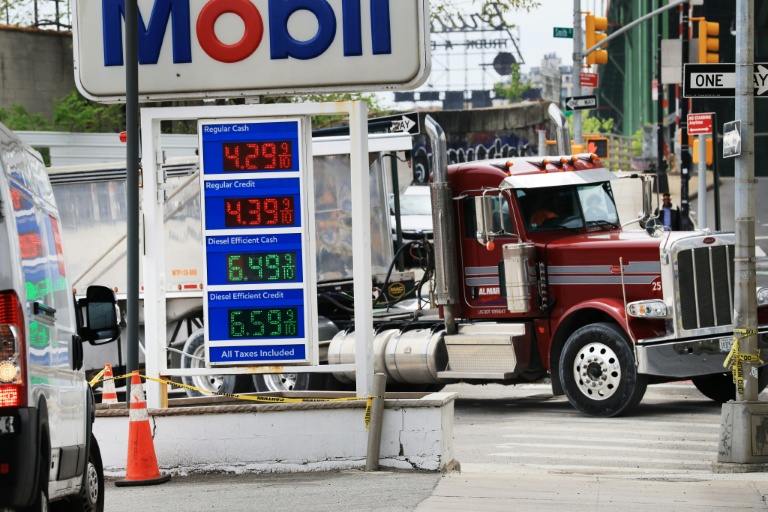
But gasoline prices sit above the psychologically important $4 per gallon level, posing political risk to US President Donald Trump ahead of the US midterm elections. While crude prices are relatively high, executives with the two oil giants emphasized the effects of diminished refinery capacity in the wake of Iran’s virtual shutdown of the Strait of Hormuz that has led some plants to shut or reduce runs. “I wouldn’t hold my breath here in the short term,” ExxonMobil Chief Executive Darren Woods told CNBC in response to a question about when gasoline prices will fall. “I think we’re going to see prices consistent with what we’re experiencing for quite a while yet,” said Woods, describing a “disconnect” between crude and gasoline markets distinct from long-term trends. “We’ve got to get the Strait opened up and then we’ve got to resupply the inventories and get things moving,” Woods said.
Chevron Chief Executive Mike Wirth described the meager state of motor gasoline inventories as part of a broader dearth of refined products supplies that also affects jet fuel and diesel, among other goods. “We’re going to see upward pressure on product pricing here into the third quarter and perhaps beyond that,” Wirth told analysts on a conference call.
With revenues of $116 billion, up 42 percent, ExxonMobil pointed to higher oil prices as a factor in its earnings while emphasizing huge increases in refining margins. Refining margins, the profit from gasoline and other products minus crude oil costs, “reached record levels in the quarter,” ExxonMobil said in prepared remarks that cited a nearly nine percent drop in global capacity because of war-related dislocations. Besides lost volumes due to the Strait of Hormuz, Woods cited a drop in China fuel exports and lost Russian refining capacity following attacks by Ukraine. While the effects from the war mostly benefited ExxonMobil, damage to key liquefied natural gas assets in Qatar dented output, Woods said on a conference call with analysts. Woods predicted shippers will “take some time” once the Strait of Hormuz reopens to believe transit is safe, adding further to market tightness.
The strong results from US oil giants come on the heels of massive profit increases at Shell and TotalEnergies that have prompted calls in some European countries to impose windfall profits taxes. On Thursday, the Portuguese government approved a draft law imposing a windfall profits tax on the sector, saying the funds will benefit “families and sectors most impacted by fuel price increases,” as well as supporting investments to decarbonize the economy. Woods, a frequent critic of European environmental policies, called windfall profits taxes “short-sighted,” saying such measures would “inflict more higher costs and lower standards of living on their population.”
Chevron’s results also benefited from increased refinery margins as well as higher crude prices, which came in at an average of $96.41 a barrel on international assets, up 64 percent from the year-ago period. Another boost compared with the year-ago period came from increased upstream production after Chevron completed the acquisition of Hess in July 2025. But Chevron also experienced some negative impacts from the war, pointing to reduced petroleum output from the “Partitioned Zone” between Saudi Arabia and Kuwait. Results were also dented by reduced international refining runs because of a 10 percent drop in crude oil inputs. ExxonMobil shares fell 1.9 percent near midday while Chevron climbed 1.4 percent.
© 2024 AFP