
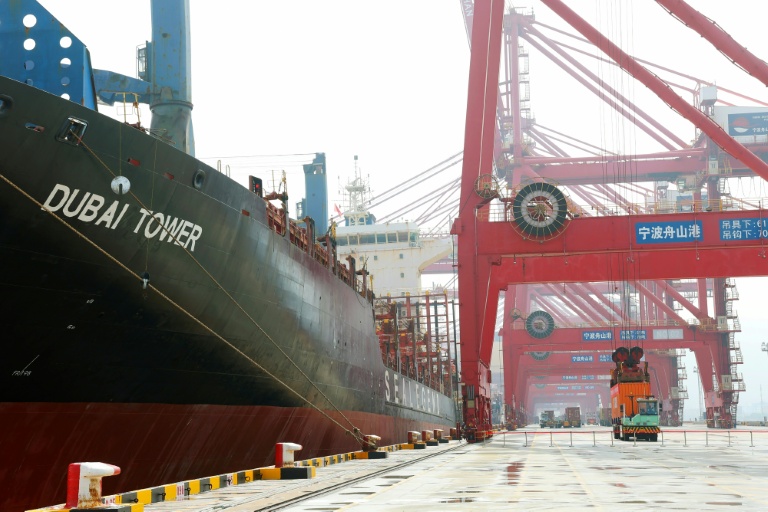
Beijing (AFP) – A Chinese container vessel has set sail for Europe through the Arctic, part of new weekly service on a route that cuts shipment times in half but which environmental groups warn could speed up the melting of polar ice. The “Dubai Tower” left the eastern port city of Ningbo on Saturday evening heading north, where it will pass through the Bering Strait, then turn west through the frigid waters along Russia’s northern coast. It is expected to reach Felixstowe in the United Kingdom on September 7, followed by stops in Hamburg, Germany and Gdynia, Poland later that week, according to a timetable published by Sea Legend.
The Northern Sea Route (NSR) from China to Europe is significantly faster than that through the Suez Canal and allows vessels to avoid the Red Sea, where shipping has been targeted by Iran-backed Houthis in Yemen. But the route is only accessible during the time of the year when the ice is melted enough to allow transits without icebreakers. Global shipping is heavily disrupted by war in the Middle East, sparked by US-Israeli strikes on Iran in late February.
Other shipping companies have transited the Arctic passage before, with Denmark’s Maersk the first to do so in 2018. Last year, 23 container ships transited through, up from 15 in 2024, according to shipping analysis from business insurer Allianz Commercial. Environmental groups warn that increasing numbers of ships transiting the shorter NSR could accelerate loss of Arctic sea ice — already made vulnerable by rising global temperatures.
Major shipping companies including France’s CMA CGM, Switzerland-headquartered MSC, and Germany-based Hapag-Lloyd have pledged to “avoid Arctic trans-shipment routes.” But analysts say the Arctic could serve as an important future trade route, particularly for China, which has outlined plans for greater access to the region through a “Polar Silk Road.”
© 2024 AFP