
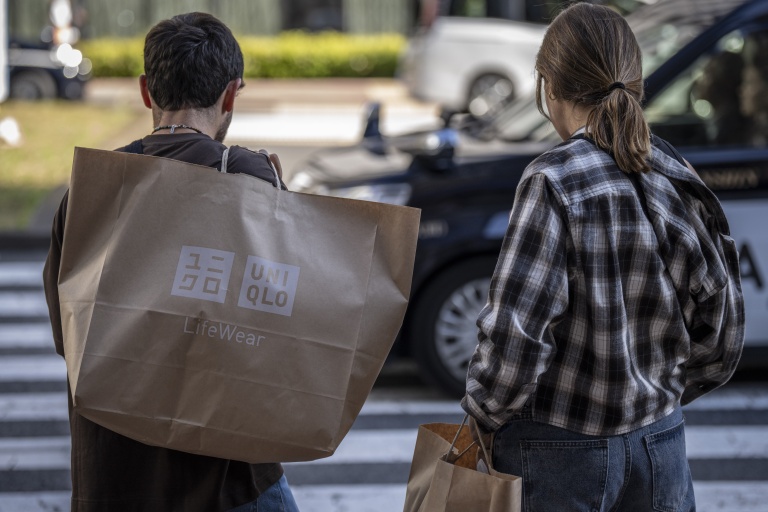
Tokyo (AFP) – When Japan’s “symbol of affordability” Uniqlo decided to increase the price of its basic socks last month, it sparked a backlash before the clothing titan made an immediate U-turn. That came after Italian-style family restaurant chain Saizeriya issued an almost grovelling apology as it decided to add 20 yen ($0.13) to the price of its trademark Milanese Doria, lamenting its “lack of effort.”
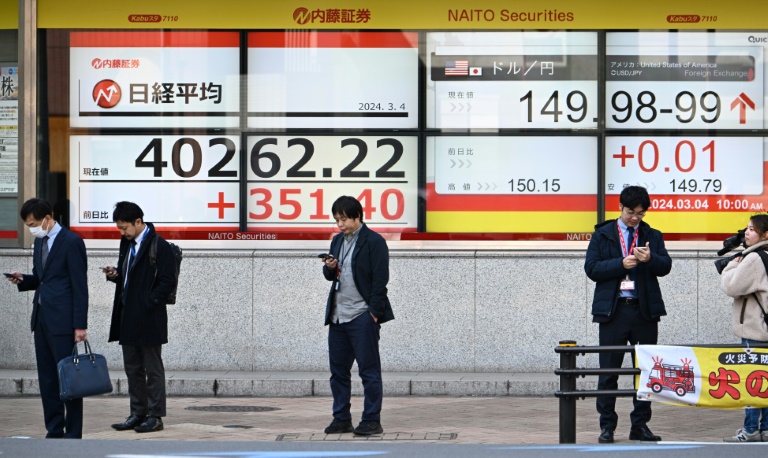
The very public angst — including in one of the world’s most recognisable clothing brands — highlights the struggles Japanese firms face as they battle rising costs in a country where decades of deflation have nurtured a consumer class averse to higher prices. The Bank of Japan last month declared its two-percent inflation target had been met, after 13 years of ultra-loose monetary policy. Measures unveiled in 2013 by then-prime minister Shinzo Abe — and continued by successive governments — were supposed to end a spiral of deflation that had plagued Japan for decades since the mid-1990s. However, it wasn’t until 2022 — when the Ukraine war triggered a global energy shock — that inflation started flickering back to life in resource-poor Japan.
Then the US-Israel war on Iran saw Tehran choke off the strategic Strait of Hormuz, slashing crude exports from the Middle East and impacting global supply chains, in turn sending company costs soaring.
– ‘Sorry for our customers’ –
While firms in most countries have been able to lift prices accordingly — albeit to expected anger — those in Japan have to battle an inherent view that hikes are taboo. Businesses big and small have found themselves hard-pressed to plough ahead with drastic price hikes to avoid alienating customers. Decisive increases can be more of a risk for smaller, countryside businesses whose survival often hinges on loyal patronage by regular clients.
Sachi, 68, a ramen shop owner in western Japan’s Okayama region, has been holding off on raising prices despite snowballing costs. “When I imagine myself suddenly announcing a 200-yen hike, for example, I cannot help but feel guilty and sorry for our customers who have supported us for years,” Sachi, who only gave her first name, told AFP during a recent trip to Tokyo. “So my thinking is, ‘I would rather persevere myself’. I think lots of tiny businesses are like that, especially in rural areas.”
Uniqlo’s decision to row back on its sock price hike came as it sought to protect its status as a paragon of affordability portrayed in local media. Saizeriya, whose price increases went far beyond Doria to cover almost all menu items, issued a statement some saw as self-flagellating. The company’s president even vowed at a news conference to “look for any excuses to lower prices again,” to the amazement of social media users. Still, the chain kept other items such as wine — a stunningly cheap 100 yen per glass — unchanged because “we want it to be enjoyed casually,” its public relations office told AFP.
– ‘Insanely high’ –
Soaring grocery bills have left Japanese households less room to spend on other purchases, from dining out to clothing, even as these businesses grapple with rising labour and material costs of their own. This is despite recent labour ministry statistics showing real wages in Japan have increased year-on-year for eight consecutive months. “Food prices are getting insanely high, so I have to increasingly rely on stuff imported from overseas, because homegrown products cost me more,” Tokyo office worker Kazuhiko Sato told AFP. “I’m also eating out less,” he said.
To make matters worse, the Bank of Japan has embarked on a period of interest rate increases to battle inflation, with borrowing costs at a more than 30-year high and likely to go up again. Tsutomu Watanabe, the professor at the University of Tokyo’s graduate school of economics, said: “Pay raises are still largely insufficient and not benefiting everyone.” A similar or even higher rate of inflation permeates other Group of Seven economies, but “wage hikes there have been decent enough to keep spending from weakening,” he told AFP.
Therein lies a key difference from Japan, which essentially remains “a convalescent trying to recover from decades of deflation,” the economist said. “The pricing power of companies is still pretty much dictated by consumers” in Japan, he said. He thinks it will be “another three to four years” before Japanese consumers undergo a mentality shift to accept chronic inflation as the natural result of steep wage increases. “After 30 years of deflation, transitioning to a different regime inevitably takes some time,” he said.
© 2024 AFP