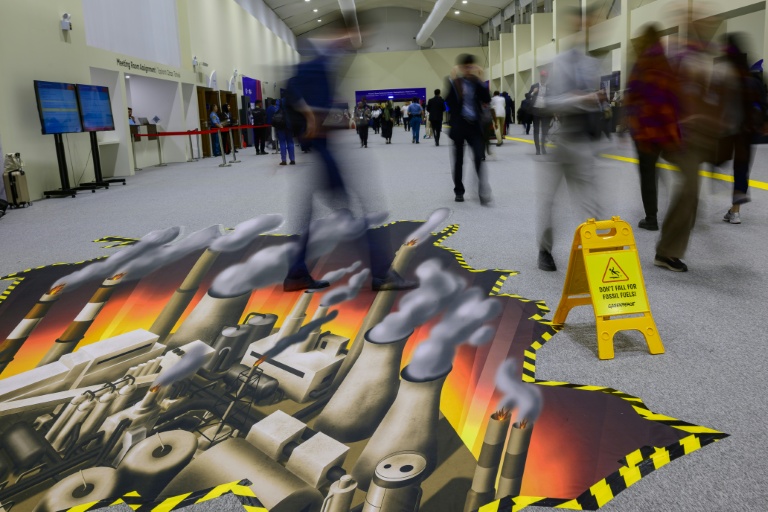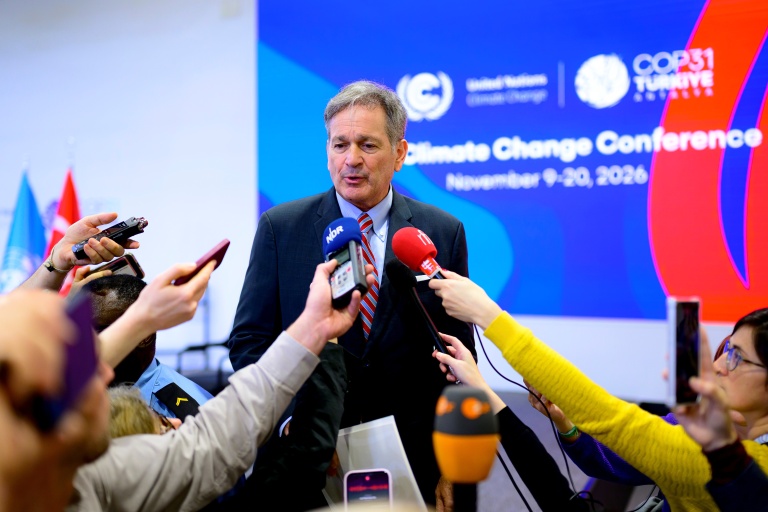

Antalya (Turkey) (AFP) – The UN’s COP31 climate talks ran into overtime Friday as countries clashed over a draft deal that was silent on fossil fuels, with a host of other disputes also snarling negotiations. Grey skies added to the sombre mood in the Turkish Mediterranean city of Antalya as negotiators from nearly 200 countries struggled to bridge their differences after two weeks of intense talks. “At this point, no one is happy,” Brazil’s national secretary for climate change, Aloisio Lopes Pereira de Melo, told reporters.
The summit follows a series of stark reminders of the urgency of climate action, from heatwaves in Europe to devastating floods in Nepal. But expectations of a major breakthrough have been low at COP31 as countries grapple with an oil price shock and geopolitical tensions stemming from the war in Iran. A sprawling initial draft deal earlier this week included strong calls to accelerate the phase-out of coal, oil and gas and tackled other flashpoints including finance and climate science. However, a new, shorter version released by COP31 co-host Australia on Thursday omitted any mention of fossil fuels, which are the main driver of climate change. A third, revised version is expected later Friday, with negotiations expected to drag into the weekend.
A dozen European and developing countries — from France to Panama and the Solomon Islands — released a letter Friday insisting that the deal include “a clear transition away from fossil fuels.” Panama’s environment minister, Juan Carlos Navarro, said “the COP can still be saved” if the deal includes the phase-out and other issues, including a defense of climate science. An outspoken critic of what he calls the “petroleum mafia,” Navarro has threatened to block any deal that does not include a cap on oil production.
The latest draft “cover decision” includes a call to electrify the world economy, saying it could have “significant benefits” in shoring up energy security and cutting planet-heating greenhouse gas emissions. “Electrification is the key to transitioning away from fossil fuels,” Australian Climate Minister Chris Bowen, who is chairing COP31 negotiations, told reporters. Bowen, who was shuttling between delegations to seek compromises, said he would work over the “coming hours, for as long as it takes, to get the job done.” “People have strong views of course — I am not stepping away from that. But no one has said to me let’s give up and go home,” the veteran of five COPs said.
The text reflects a push by COP31 host Turkey for countries to rally behind a goal to increase the global share of final energy demand met by electricity to 35 percent by 2035. However, some countries want an explicit requirement that the “electrification” target be powered by renewable energy, not coal or gas. Nations agreed at COP28 in Dubai in 2023 to transition away from fossil fuels but did not set targets or timelines. Yet, Saudi Arabia and other major oil producers have fiercely resisted any attempt to bring the issue back to the table. A European Union official, speaking on condition of anonymity, told AFP that the latest draft was “not acceptable and not ambitious enough.” “We don’t want this COP to become a ‘fossil’ COP,” the official said.
Some countries also objected to a call to scale up carbon capture — a costly, still-developing technology that critics say allows polluters to continue burning fossil fuels. “We’re quite disappointed by the text,” Vanuatu’s Climate Minister Ralph Regenvanu told AFP. “We want to see the references to false solutions removed.”
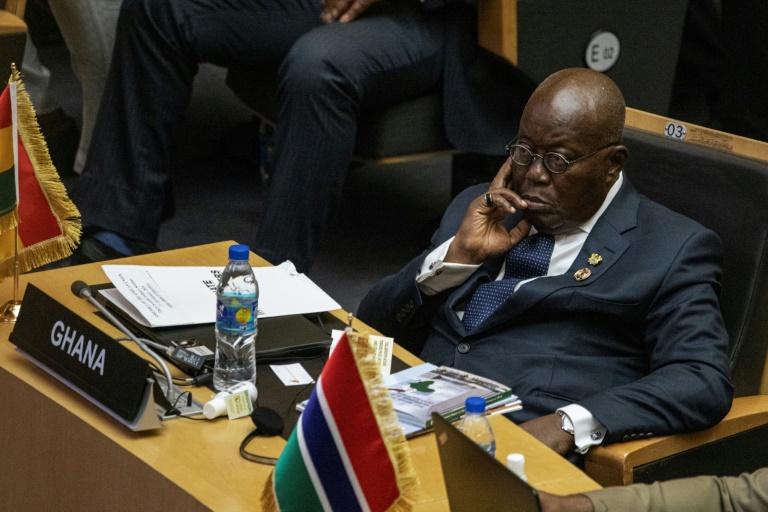
Countries are sharply divided over a raft of other issues. The timing of the next set of reports by the UN’s Intergovernmental Panel on Climate Change (IPCC) has been a major source of friction. The draft also expresses “deep concern” about the imminent breach of the 1.5C temperature goal set under the 2015 Paris accord. Negotiations are also deadlocked over long-running complaints by developing countries that rich nations are falling short in their obligations to help them confront climate change. “We didn’t come here to beg,” said Ghana’s environment minister, Zanetor Agyeman-Rawlings. “The (African) continent will not accept an outcome that offers declarations without the resources to deliver them,” she said.
© 2024 AFP