

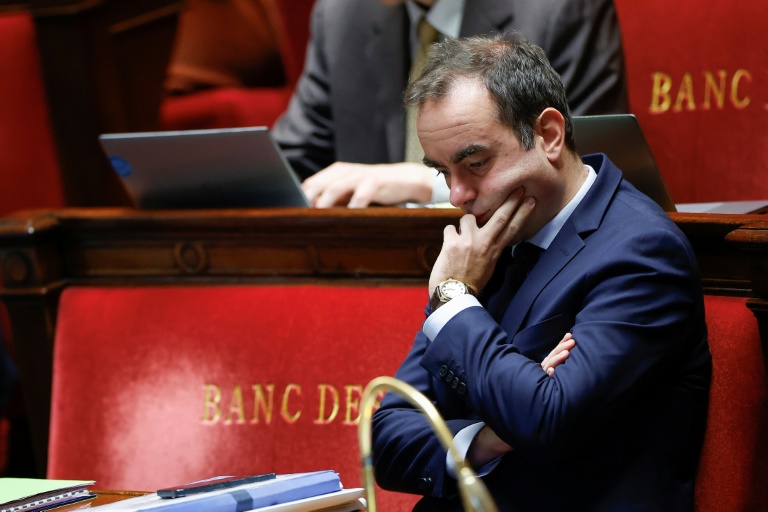
Paris (France) (AFP) – France’s social security bill was to go to a vote in parliament Tuesday, in a key hurdle for Prime Minister Sebastien Lecornu after he pledged to deliver a 2026 budget by year-end. Lawmakers failing to back the plan, which includes the suspension of an unpopular retirement reform, could plunge France into further political crisis and call into question the ability of Lecornu’s minority government to govern. The outcome of the vote is uncertain. Socialists are expected to back it, but the right and some centrists could vote against the bill as they believe it includes too many concessions to the left.
French far-right leader Marine Le Pen said it was “very likely” her party would vote against the social security budget and reiterated her call for snap elections. “We cannot move forward without a clear majority and that the desire of all groups to avoid new elections is, in fact, a destabilising factor for our country,” Le Pen told reporters. Ayda Hadizadeh, a Socialist lawmaker, said her party would back the bill by “a very large majority.” But she said there was “this growing discourse saying that without an absolute majority we should dissolve parliament, or that the president should resign.”
Lecornu has warned politicians against torpedoing the budget plan. “This social security budget bill is not perfect, but it is the best possible,” Lecornu wrote on X on Saturday. “Not having a budget would be dangerous for our social protection, our public accounts, and the role of parliament.”
The eurozone’s second-largest economy is under pressure to cut its budget deficit, but efforts have been hamstrung by political instability since President Emmanuel Macron called snap elections last year, leading to a fragmented parliament. Lecornu has promised to secure approval for a spending plan by the end of December. But in a bid to avoid the fate of his two predecessors, who were toppled over cost-cutting measures, he has pledged to abandon a controversial constitutional power used in the past to slam the spending plan through parliament without a vote.
This had led to protracted debates on the two main parts of the budget — the state budget bill and draft law for the social security budget. The premier has also pledged to suspend a 2023 pensions reform to raise the retirement age from 62 to 64 to secure the support of the Socialists, a swing group in parliament. On Tuesday evening, the lower house of parliament was to vote on the social security bill, which includes postponing the pensions reform until 2028, after the end of Macron’s term in office.
If not enough lawmakers approve the legislation, it could lead to calls for Lecornu to resign. Government spokeswoman Maud Bregeon said this weekend that his stepping down “would make no sense.” If the lower-house National Assembly does approve the social security budget, it will head back to the Senate — which is opposed to suspending the retirement reform — and then return to the lower house. The Senate is to vote on the other part — the state budget — on December 15.
© 2024 AFP