
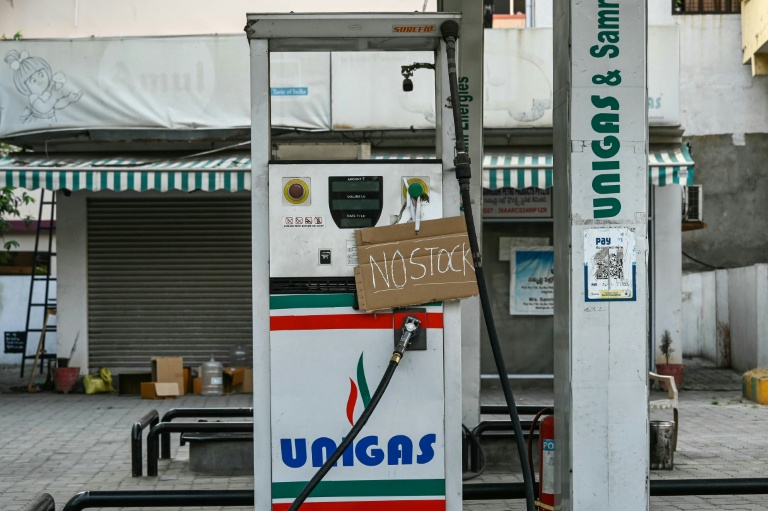
Paris (France) (AFP) – Here are the latest economic events in the Middle East war:
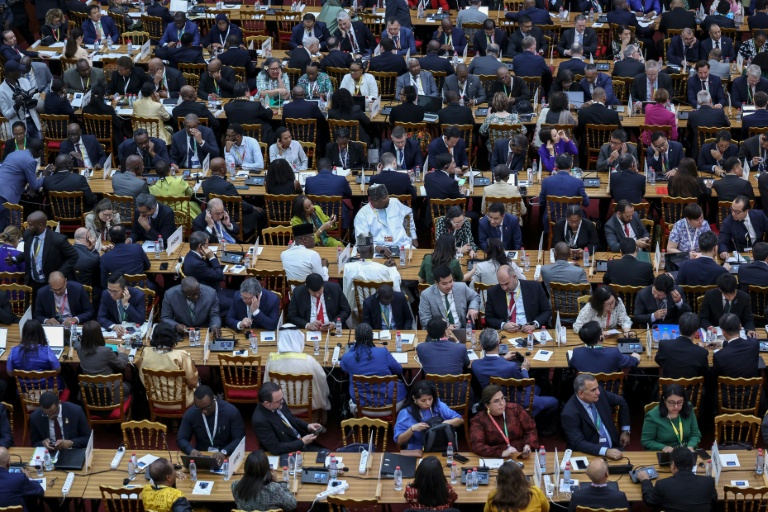
The World Trade Organization (WTO) has warned that the global trading system is experiencing the “worst disruptions in the past 80 years.” WTO chief Ngozi Okonjo-Iweala made this statement Thursday at the opening of the WTO ministerial conference, stating, “The world order and the multilateral system we used to know has irrevocably changed.” She emphasized the magnitude of the problems confronting the world today.
The Organization for Economic Cooperation and Development (OECD) has cut its eurozone growth outlook and forecast higher inflation for 2026, attributing these changes to the Middle East war, which has skyrocketed energy prices. The Paris-based group lowered its growth forecast for the currency union by 0.4 percentage points to 0.8 percent. While it largely maintained its 2026 forecasts for the United States and China, it warned of further fallout should hostilities continue.
Oil prices rose while equities fell Thursday as confidence in a swift resolution to the Middle East war dwindled. Brent crude increased by 4.8 percent to nearly $102 a barrel around 1730 GMT, while West Texas Intermediate rose five percent to just under $95 a barrel.
In response to rising energy prices caused by the conflict in Iran, South Korea is set to implement a $17 billion “wartime” supplementary budget and expand fuel tax cuts. The government announced that it would draw up a supplementary budget worth 25 trillion won next month, funded by excess tax revenue, to address the prolonged Middle East conflict.
Spain’s parliament approved a sweeping package worth five billion euros ($5.8 billion) aimed at mitigating the economic impact of the Middle East war, which includes significant cuts to energy taxes. Similarly, Cyprus unveiled a 200-million-euro support package on Thursday to shield households and businesses from the economic fallout of the Iran war, which has led to a spike in fuel prices. This package combines tax relief, subsidies, and targeted support for vulnerable sectors such as tourism and agriculture.
Poland’s Prime Minister announced a series of measures on Thursday to alleviate the impact of soaring fuel prices, including reduced taxes and price ceilings. The value-added tax on petrol and diesel will be lowered from 23 percent to eight percent, and a maximum price will be set daily by the energy ministry.
Japan stated it has begun to release another part of its strategic oil reserves to mitigate the impact of rising prices stemming from the conflict. Japan, being the fifth-largest importer of oil, sources more than 90 percent of its oil from the Middle East.
German consumer confidence has taken a hit as sentiment fell heading into April due to the ongoing Middle East war. A survey indicated that consumers expect inflation to rise again and believe that the economic recovery will be hindered by higher energy prices, according to Rolf Buerkl, head of consumer climate at the Nuremberg Institute for Market Decisions.
In the Philippines, a ship carrying over 700,000 barrels of Russian crude oil arrived, just days after the Southeast Asian country declared a national energy emergency in response to the Middle East war. Additionally, the German government and the country’s chemical industry presented a comprehensive plan to support the ailing sector, which faces new challenges from the energy shocks caused by the conflict.
Lastly, Taiwan has been subjected to a wave of online disinformation claiming that the island’s gas supplies will soon be completely depleted due to the disruptions from the Middle East war. Officials warn that this false narrative could incite panic and undermine confidence in the government.
© 2024 AFP