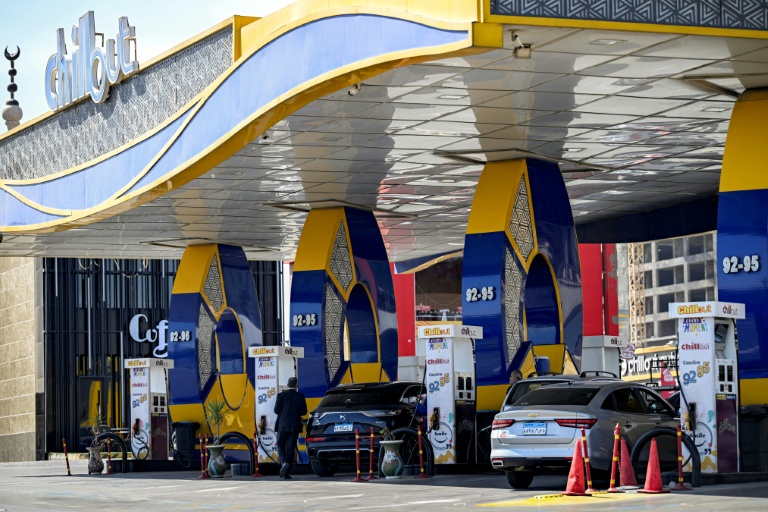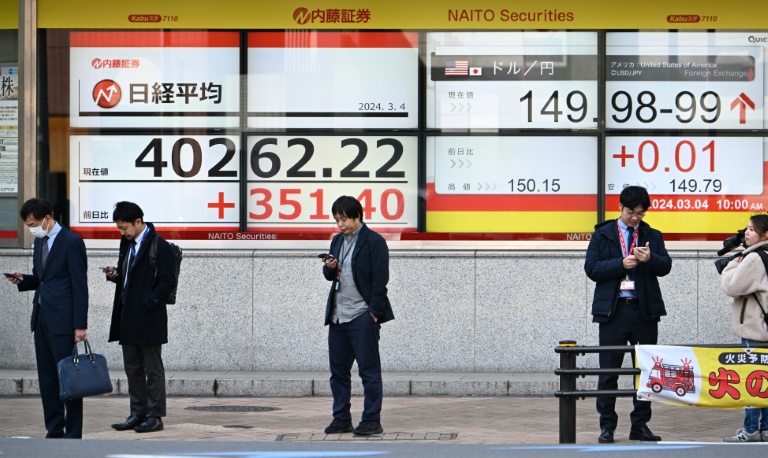

Tehran (AFP) – Iran unleashed early Wednesday defiant new strikes around the region, including drones targeting a Saudi oilfield, as the International Energy Agency reportedly proposed its largest-ever oil reserve release to calm markets and prices. The war sparked by US-Israeli strikes on Iran has spread across the region and caused spiking energy costs, forcing fuel rationing, price hikes, and even school closures globally.
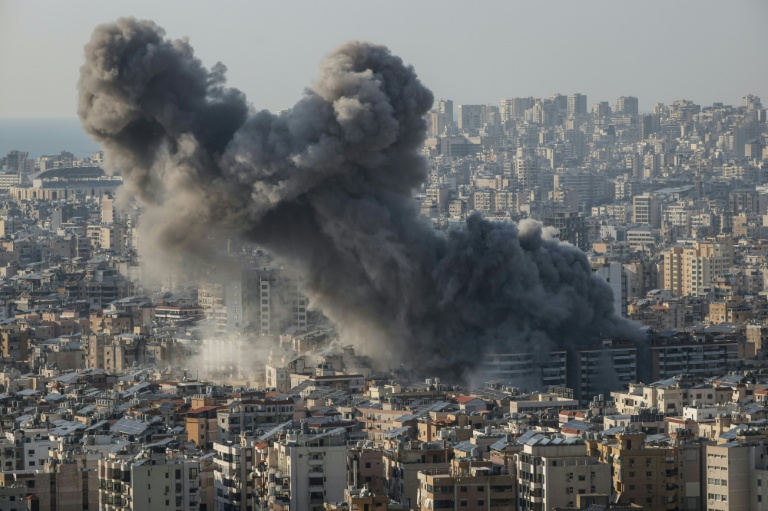
G7 leaders will meet by video conference later Wednesday to discuss the war’s economic consequences, particularly the “energy situation,” the French presidency said, with the IEA also due to decide on a proposal for its largest-ever oil reserve release, the Wall Street Journal reported. The United States on Tuesday said it was hitting Iranian ships capable of mining the Strait of Hormuz, the crucial passageway for oil that has been effectively closed by Iranian threats. Israel also launched new waves of strikes both in Beirut and Tehran, where residents hunkered down after being smothered by black rain from Israeli bombing of fuel depots.
The US military posted video footage of Iranian boats blasted apart, saying it had destroyed 16 minelayers near the Strait of Hormuz, through which one-fifth of the world’s oil passes. “If for any reason mines were placed, and they are not removed forthwith, the Military consequences to Iran will be at a level never seen before,” President Donald Trump wrote on social media. Trump faces mounting political risks over the surging cost of oil, months before US elections. Crude prices spiked five percent late Tuesday, though it turned lower Wednesday after the reserve release report. Trump has offered for the US military to accompany tankers through the strait, but his administration acknowledged that a post by the energy secretary announcing a first such escort was untrue.
With an eye on jittery markets, Trump on Monday said the war would be short, although his defense secretary, Pete Hegseth, then said Tehran would be hit by unprecedented fire on Tuesday.
– ‘Not seeking ceasefire’ –
Iran’s government, run by Shia Muslim clerics, defiantly said that it carried out its own “most intense and heaviest” salvo early Wednesday, firing missiles for three hours at cities across Israel. AFP journalists heard air raid sirens and explosions in Jerusalem. Emergency services reported no immediate injuries, although Channel 12 said several people were hurt in Tel Aviv. New salvos were reported early on Wednesday, with no reports of injuries.
Iran’s Revolutionary Guards said they also fired on Bahrain and Iraqi Kurdistan, both of which have a heavy US presence. Drone and ballistic missiles were intercepted across the Gulf on Wednesday morning, including two drones heading to an oil field in Saudi Arabia, its defense ministry said. Earlier, Iranian parliament speaker Mohammad Bagher Ghalibaf, a former top commander in the elite Revolutionary Guards, said in an English-language post on X: “Certainly we aren’t seeking a ceasefire.”
“We believe the aggressor must be punished and taught a lesson that will deter them from attacking Iran again,” he added. Seven US military personnel have been killed and about 140 injured since the start of the war, according to the Pentagon.
– Fright in Tehran –
The United States and Israel launched the war on February 28 with an attack that killed Iran’s veteran leader, Ayatollah Ali Khamenei. His son Mojtaba Khamenei has been named his successor. The attacks came weeks after Iranian authorities ruthlessly crushed mass protests, although the United States and Israel say they are not necessarily seeking to topple the Islamic republic.
In Tehran, one woman in her 40s said she found some reassurance in her impression that the bombings “don’t target ordinary buildings.” But she said, “The noise of the bombings is extremely disturbing.” Iran has sought to extract a heavy price on the global economy, attacking the showcase cities of the Gulf including their gleaming airports and energy production.
The UAE’s biggest oil refinery at Ruwais was closed on Tuesday as a precaution after a drone attack on the industrial complex that houses it caused a fire, a source familiar with the situation told AFP. AFP journalists also reported explosions in Qatar, where a suspension of LNG exports has sent European energy prices sky-high. “There would be catastrophic consequences for the world’s oil markets the longer the disruption goes on, and the more drastic the consequences for the global economy,” Saudi oil giant Aramco’s president and CEO Amin H. Nasser told journalists. “It’s absolutely critical that shipping resumes in the Strait of Hormuz.”
– War effects spreading –
Iraq and Lebanon, both home to Shia fighters tied to Iran, have become proxy grounds of the war, with devastating consequences. In Iraq, Iranian-linked groups said five of their fighters died in what they suspected to be strikes by the United States. Demonstrators had sought to storm the US embassy in Baghdad, and at least five drones landed Tuesday at a military base at the Baghdad International Airport, home to a US diplomatic facility.
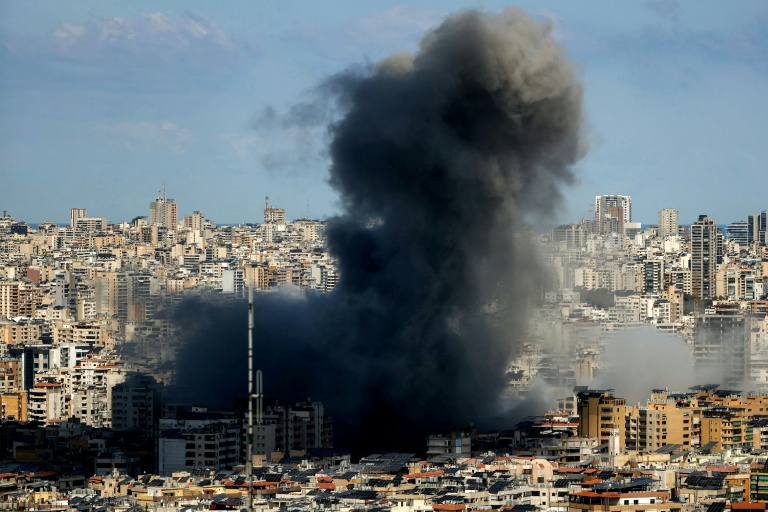
In Lebanon, authorities said that Israeli attacks killed at least 486 people and injured more than 1,300 others between March 2 and Monday, with new strikes targeting Beirut’s southern suburbs early Wednesday. Iran complained to the United Nations to say that four of its diplomats died in a strike on a seafront hotel in central Beirut on Sunday that Israel said had been aimed at “key commanders” from Iran’s Revolutionary Guards.
The effects of the war are being felt globally, with the UN trade and development agency warning of rising costs for essentials like fuel and food hitting the world’s most vulnerable people. In Egypt, which increased the cost of fuels by up to 30 percent, mother-of-six Om Mohamed fretted about the future. “We were barely getting by as it is. I don’t know how people will manage,” she told AFP at a Cairo market.
© 2024 AFP