
Paris (France) (AFP) – Here are the latest developments in the Middle East war:
– **No US ground troops**
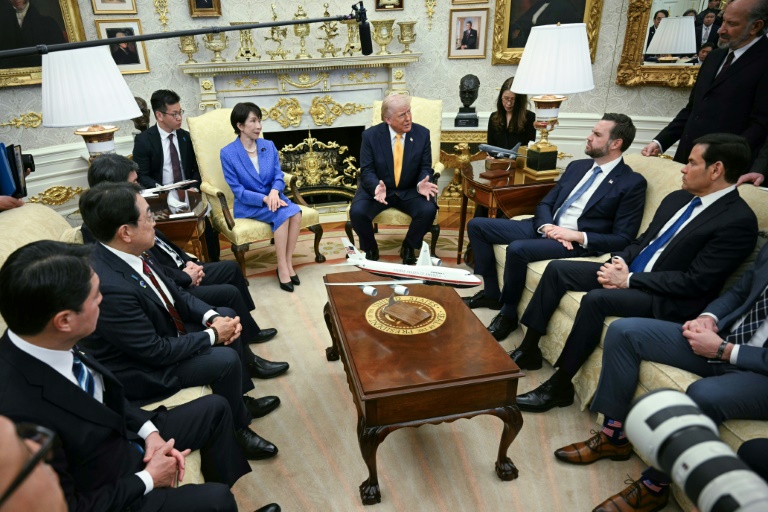
US President Donald Trump said he was not sending ground troops to Iran. “If I were, I certainly wouldn’t tell you. But I’m not putting troops,” Trump told reporters as he met Japan’s prime minister in Washington.
– **$16 bn arms sales**
The US announced that it has approved $16bn in arms sales to United Arab Emirates and Kuwait, which have been hit hard as a result of the war.
– **’Safe’ Hormuz passage**
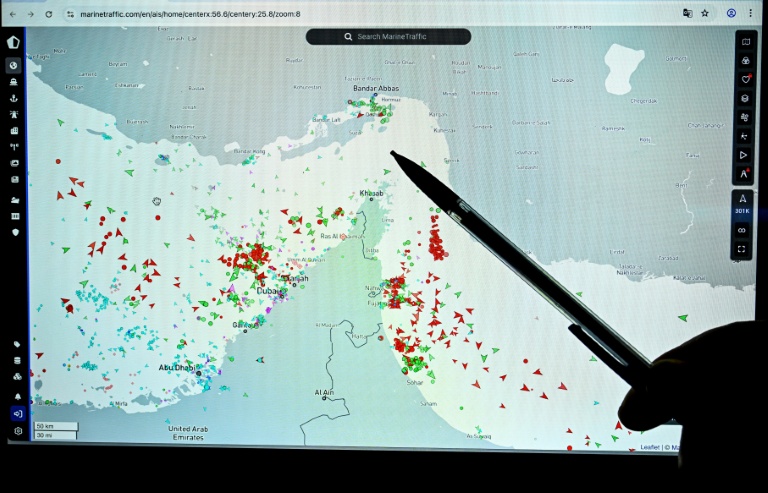
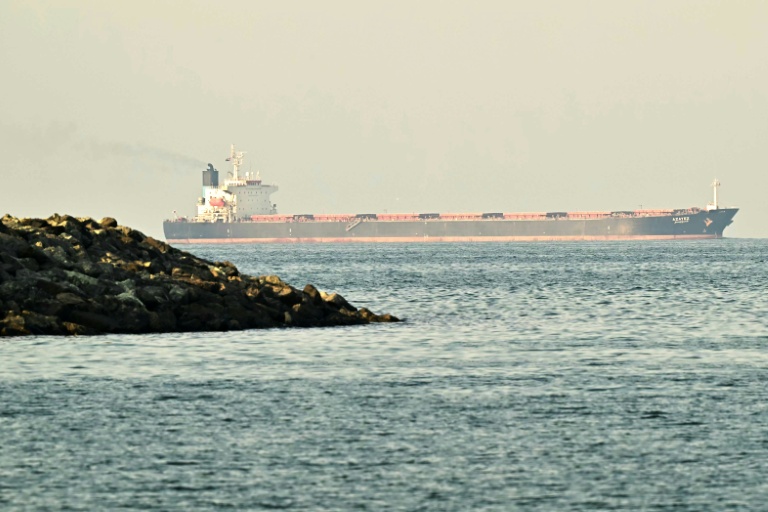
The UN maritime body called for a safe shipping “corridor” in the Gulf to evacuate stranded vessels and seafarers, at the end of a two-day emergency session on the war. Some 20,000 seafarers are stuck on approximately 3,200 vessels, according to the International Maritime Organization (IMO).
– **Israel refinery hit**
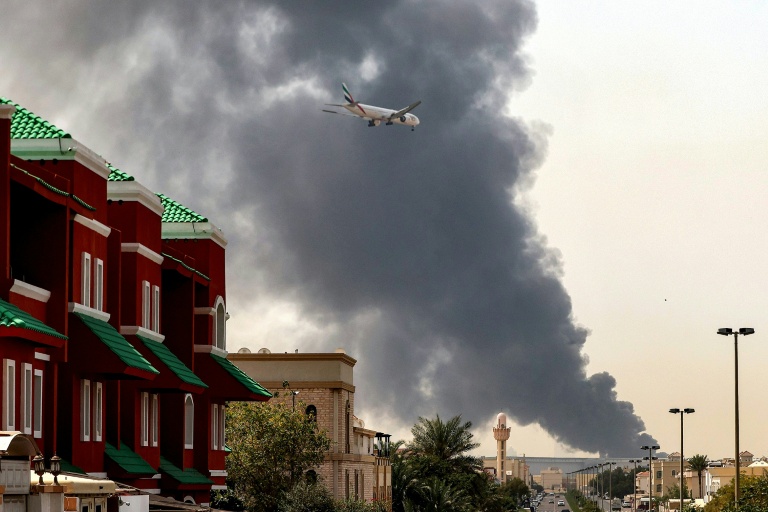
Israeli media reported that an oil refinery in the northern city of Haifa was hit, after the military warned of incoming missiles from Iran. Israel’s Kan 11 public broadcaster aired images on television showing a thick plume of dark smoke rising from the area of the refinery. In a post on X, Kan reported that there were no concerns that hazardous materials had leaked.
– **Gas hub attack**
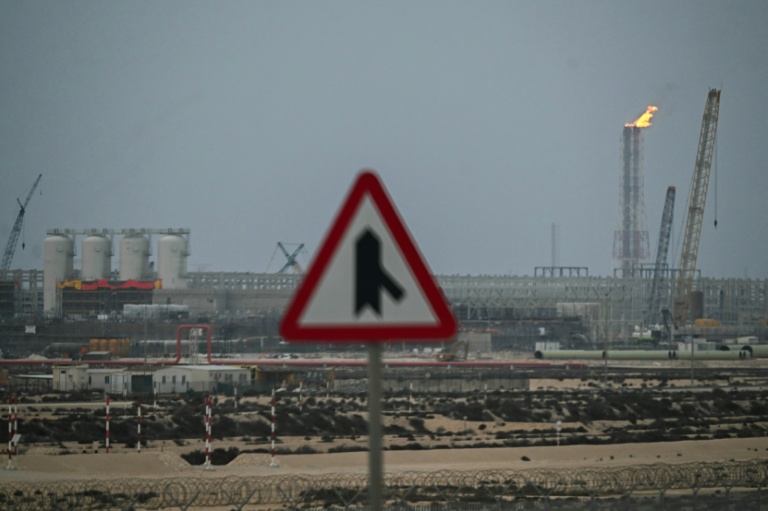
Qatar’s Prime Minister Sheikh Mohammed bin Abdulrahman Al Thani warned that Iran’s attack on the country’s main gas hub risked “significant repercussions for global energy supplies” and was “clear proof” that Iran wasn’t only targeting US interests in the war.
– **Caspian Sea strikes**
The Israeli military said that its fighter jets had struck several Iranian naval vessels in the Caspian Sea the previous day, including vessels equipped with anti-submarine missiles. “We have for the first time carried out strikes in northern Iran in the Caspian Sea,” a military spokesman said. “This is the first time we have done that in our history.”
– **Bahrain blasts**
At least two loud explosions rocked Bahrain’s capital of Manama after warning sirens sounded, according to an AFP correspondent.
– **Lebanon toll hits 1,000**
Lebanon’s health ministry said that Israeli attacks have killed 1,001 people in the country since the war erupted, including 79 women, 118 children, and 40 health workers, with 2,584 other people wounded.
– **Food security, trade**
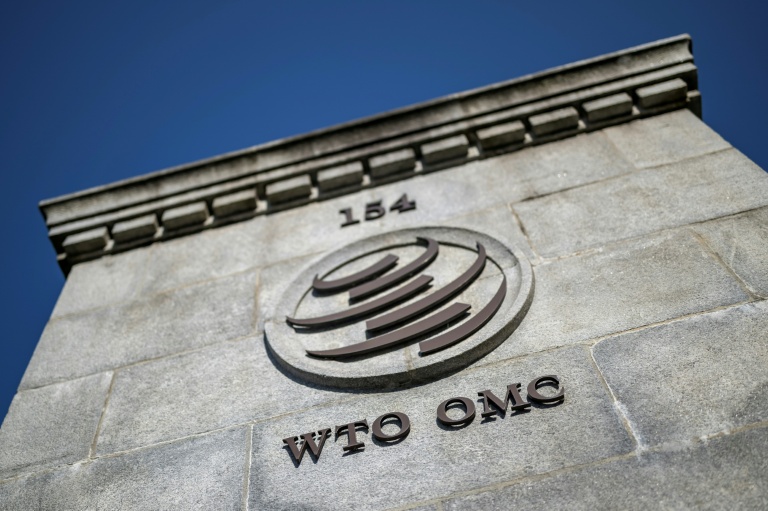
The World Trade Organization warned that the war posed a dire threat to global food security and could weigh heavily on already slowing global trade. “Sustained increases in energy prices could increase risks for global trade, with potential spillovers for food security and cost pressures on consumers and businesses,” WTO chief Ngozi Okonjo-Iweala said in a statement.
– **Iran vows ‘zero restraint’**
Iran vowed to hit hard if its energy facilities were attacked again. “ZERO restraint if our infrastructures are struck again,” Foreign Minister Abbas Araghchi said in a post on X.
– **Hormuz ‘safe passage’**
Six international powers — Britain, France, Germany, Italy, Japan, and the Netherlands — said in a joint statement they were ready “to contribute to appropriate efforts to ensure safe passage through the Strait of Hormuz.”
– **’High time’ to end war**
UN chief Antonio Guterres called on all parties to end the war. “To the United States and to Israel: it’s high time to end this war that is risking to get completely out of control,” he told reporters at an EU summit in Brussels. “To Iran, stop attacking your neighbours. They were never parties to the conflict.”
– **US has no ‘time frame’**
US Defense Secretary Pete Hegseth said the US “wouldn’t want to set a definitive time frame” to end the war. “It will be at the president’s choosing, ultimately, where we say, ‘Hey, we’ve achieved what we need to.'”
– **’Unsanction’ Iran oil**
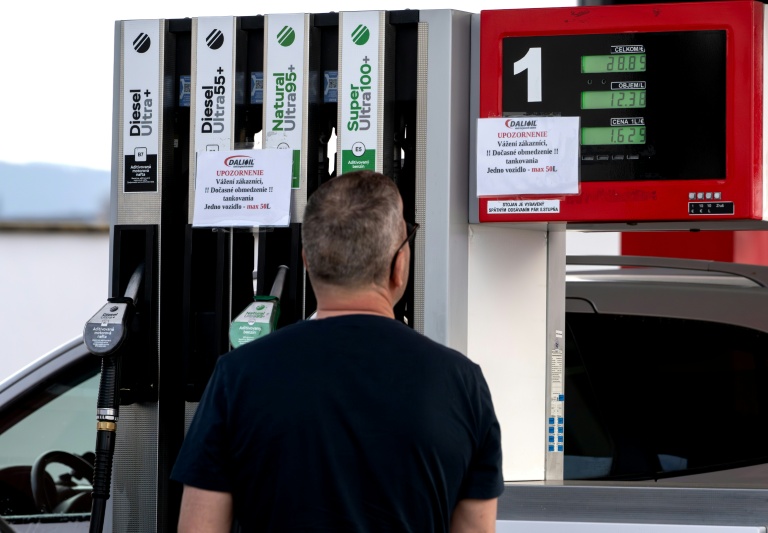
US Treasury Secretary Scott Bessent said that Washington might “unsanction” Iranian oil that is already being shipped, to temper soaring energy prices. The US could also release more oil from its strategic reserves, he said.
– **Oil prices soar**
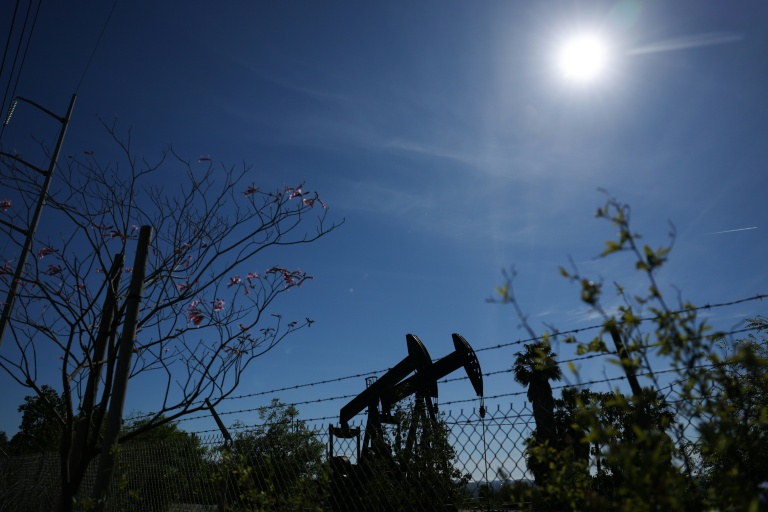
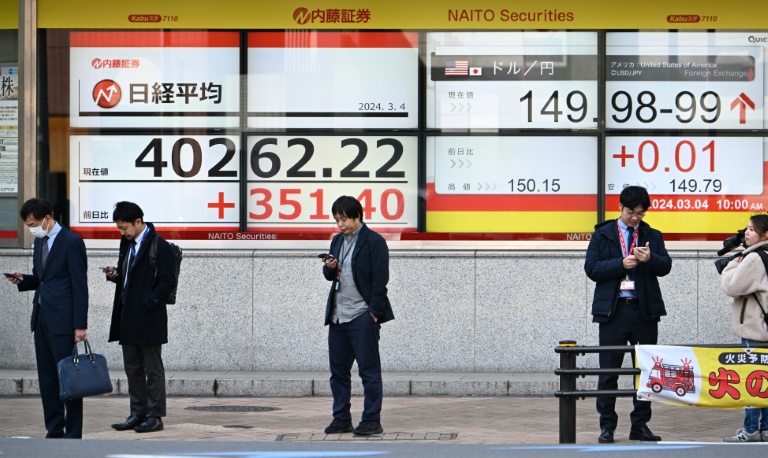
Oil prices surged 10 percent after Qatar reported “extensive” damage to the world’s largest liquefied natural gas (LNG) facility following Iranian strikes, sparking fears for global energy supplies. The price of European gas also jumped by more than a third after Tehran carried out attacks on Qatar’s huge Ras Laffan LNG facility.
© 2024 AFP