
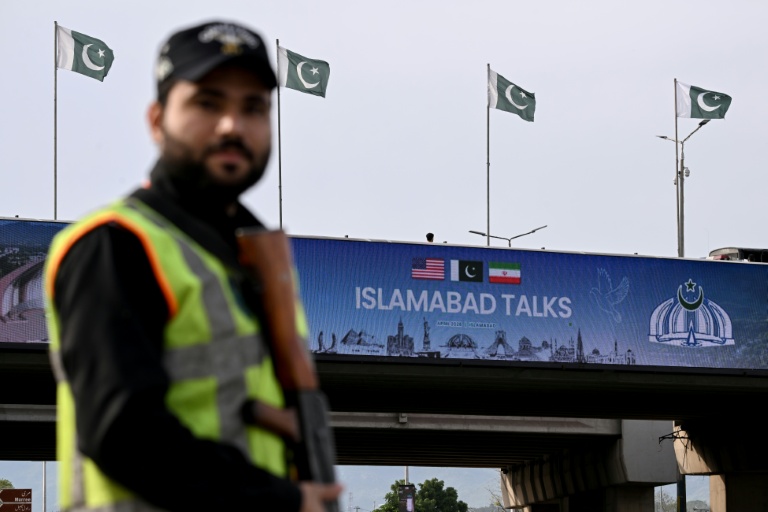
Islamabad (Pakistan) (AFP) – American and Iranian officials were holding face-to-face talks in Pakistan on Saturday, the most significant since the 1979 Islamic revolution as the foes try to end a war that plunged the Middle East into violence and rocked the world economy. As talks went late into the night, US Central Command said two warships had transited the crucial Strait of Hormuz, while Iranian media accused US negotiators of making “excessive demands” over the crucial waterway that Tehran has blocked.
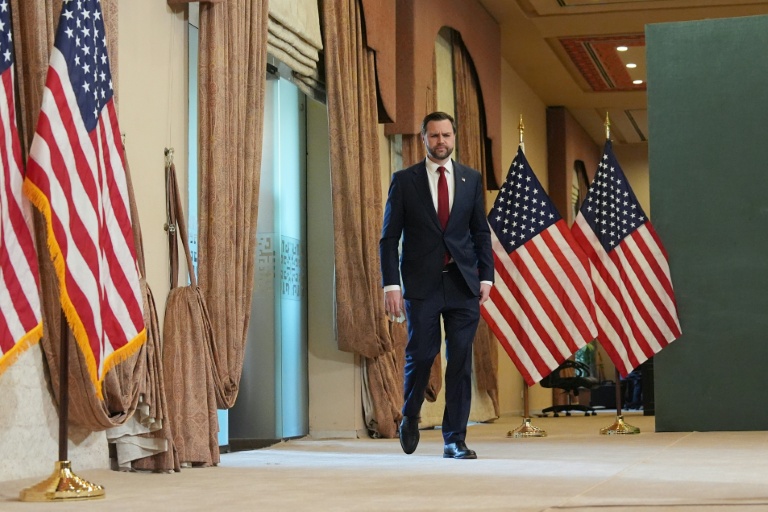
The trilateral direct negotiations were taking place with host Pakistan in capital Islamabad, a senior White House official said, a departure from recent practice where both sides held talks via a mediator while seated in separate rooms. The US delegation was being led by Vice President JD Vance, special envoy Steve Witkoff, and President Donald Trump’s son-in-law Jared Kushner, the official said, making it the highest level of American contact since the Islamic republic was established. A Pakistani official told AFP that talks were “progressing in the right direction” after two rounds. “I can say that discussions are moving positively and the overall atmosphere is cordial,” said the official, speaking on condition of anonymity. A second Pakistani official and Iranian state TV said a third round of talks was likely.
The Iranian delegation, composed of more than 70 members, was being led by parliamentary speaker Mohammad Bagher Ghalibaf, joined by Foreign Minister Abbas Araghchi. They had earlier decided to begin talks with their US counterparts after meeting with Pakistani Prime Minister Shehbaz Sharif, according to Iranian media reports. “The Prime Minister expressed the hope that these talks would serve as a stepping stone toward durable peace in the region,” Sharif’s office said.
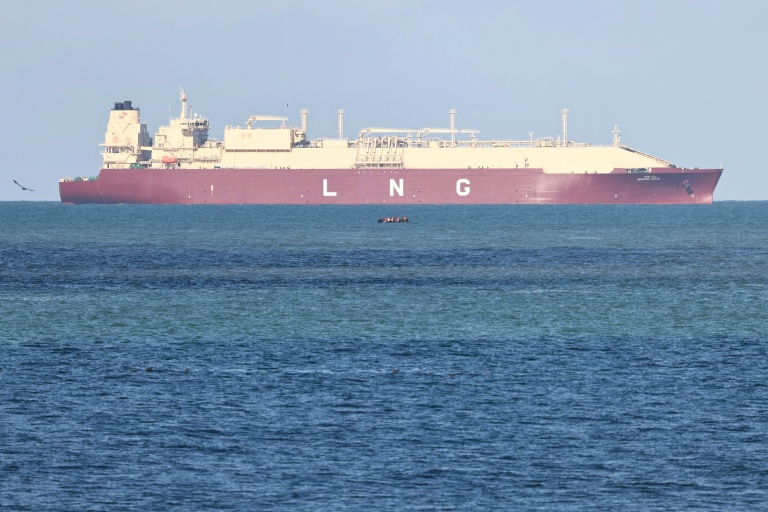
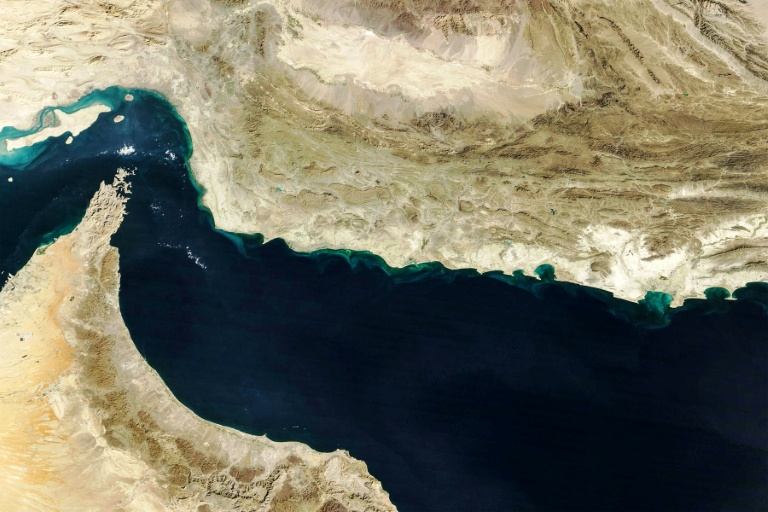
The talks came as Trump said the US had started “clearing out” the Strait of Hormuz, through which one-fifth of the world’s crude passes in peacetime, before Central Command said it had launched an operation to clear mines laid by Iran. “Today, we began the process of establishing a new passage and we will share this safe pathway with the maritime industry soon to encourage the free flow of commerce,” said Centcom commander Admiral Brad Cooper. The Iranian military denied that any American vessels had entered the waterway. Iran has said that any agreement to end the war must include the unfreezing of sanctioned Iranian assets as well as an end to Israel’s war against Hezbollah in Lebanon, which Vance has said will not be up for discussion in Islamabad. Iranian state television’s correspondent at the talks said progress had been made on these issues, giving Iran the confidence to proceed. A US official denied reports Washington had agreed to unfreeze Iran assets held in Qatar.
Despite progress, the warring parties made no attempt to hide their mutual suspicion. “Our experience in negotiating with the Americans has always been met with failure and broken promises,” Ghalibaf said, shortly after landing in Pakistan. Vance said before leaving the US that if the other side was “willing to negotiate in good faith, we’re certainly willing to extend the open hand.” But he said the negotiating team would not be receptive “if they’re going to try to play us,” he added. Experts, however, said Iran’s delegation showed it was serious about leaving Pakistan with a deal. “The size, seniority, and breadth of the Iranian delegation…signal both Tehran’s sincerity in these negotiations and its expectations and confidence,” said Trita Parsi, executive vice president of the Quincy Institute for Responsible Statecraft.
The ceasefire is already under strain, notably from Israel’s continued strikes in Lebanon, which Iran and Pakistan insist is covered under the current truce. Lebanese authorities said Israeli strikes on the country’s south on Saturday killed 18 people, bringing the total death toll from Israeli strikes since the war broke out past 2,000. On Friday, Lebanon’s presidency said that a meeting would be held with Israel in Washington next week. Israeli Prime Minister Benjamin Netanyahu in a televised statement on Saturday said he wanted a peace deal with Lebanon that “will last for generations.”
Trump had said that his top priority at the Islamabad talks was to ensure the Islamic republic had “no nuclear weapon. That’s 99 percent of it.” Netanyahu said the joint US-Israeli campaign had already succeeded in “crushing” Iran’s nuclear and ballistic missile programmes. Security was tight in the Pakistani capital on Saturday, with a heavy police and paramilitary presence on the streets and road diversions around the “red zone” where government and diplomatic buildings are located. Pakistan has formulated a team of experts to facilitate the two sides in negotiations on navigation, nuclear, and other key matters, a diplomatic source familiar with the matter told AFP.
The negotiations will be closely watched by other key regional players, with Egypt and Turkey having helped with mediation, along with China, the source said. In Tehran, a 30-year-old resident told AFP he was sceptical negotiations would be successful, describing most of what Trump says as “pure noise and nonsense.”
© 2024 AFP