

EconomyLens.com
No Result
View All Result
Friday, November 13, 2026
  • Home
  • Economy
  • Business
  • Markets
  • Tech
  • Editorials
EconomyLens.com
  • Home
  • Economy
  • Business
  • Markets
  • Tech
  • Editorials
No Result
View All Result
EconomyLens.com
No Result
View All Result
Home Economy

Advanced economies must ‘act now’ to lower debt as bond yields spike: IMF

Emma Reilly by Emma Reilly
October 14, 2026
in Economy
Reading Time: 7 mins read
A A
0
21
SHARES
260
VIEWS
Share on FacebookShare on Twitter

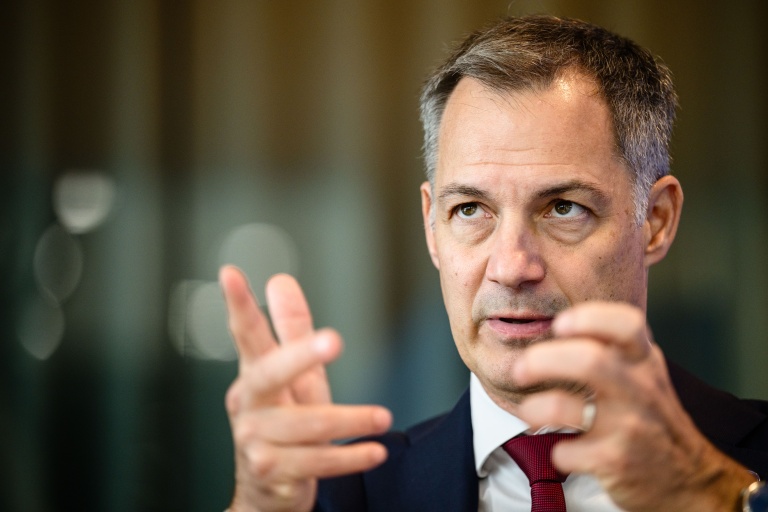
Era Dabla-Norris, Deputy Director of the Fiscal Affairs Department at the International Monetary Fund (IMF) on the opening day of the 2026 Annual Meetings of the International Monetary Fund (IMF) and the World Bank Group (WBG) in Bangkok on October 12, 2026. ©AFP

Bangkok (Thailand) (AFP) – The International Monetary Fund on Wednesday called for advanced economies to “act now” to address ballooning debt, with spiking bond yields at multi-decade highs and pressure growing on central banks to hike interest rates. Global public debt is at its highest level since the Second World War and is on track to soon exceed 100 percent of global gross domestic product, and the Fund lamented the lack of any major progress in reversing the trend.

Related

US grounds all flights, sparking travel chaos

Paraguay’s Pena faces new charges over bank crisis

Campaigners hail landmark Norway ruling against oil licences

Germany, France in ‘intensive’ talks on new ECB chief

Canadian-made ‘Paralives’ thrives despite gaming sector turmoil

“The fundamental message (is) that countries need to act now, particularly if you have high levels of debt, in order to create that room for higher spending pressures,” said Era Dabla-Norris, the Fund’s deputy director at the Fiscal Affairs department, referring to spending on defense, aging populations, and other priorities. While rises in debt have been broad-based, advanced economies have seen their debt-to-GDP ratios skyrocket since the global financial crisis in 2008, as well as due to the pandemic and the wars in Ukraine and Iran, which prompted increased spending to deal with these economic shocks.

Since late February, yields have increased by an average of around 110 basis points, especially on longer maturities, Dabla-Norris told AFP on the sidelines of the IMF’s Annual Meetings in Bangkok. On Tuesday, US 10- and 30-year Treasuries were trading at their highest yields since around 2002, with other G7 bonds following similar trajectories. The spike has been driven by a combination of factors, including heightened inflation expectations caused by skyrocketing energy prices due to the Iran war.

That, in turn, has caused many central banks to step in to address price stability, with authorities hiking borrowing costs to curb prices. The rise in rates has contributed to increases in bond yields on the short end of the curve, which has seen issuances in greater numbers, Dabla-Norris said. “High debt and shorter maturities definitely makes the interaction between fiscal and monetary policy more complex than it did in the past,” she stated. “What that really means is that if short-term interest rates change — so say monetary policy tightens — that can quickly spill over into government borrowing costs much faster than if the maturity structure was longer.”

In that situation, existing high debt levels act as an “amplification mechanism” for the effect on yields. Worldwide, governments’ average interest payments are projected to rise from 2.3 percent in 2021 to 3.7 percent in 2031, research released by the IMF on Wednesday showed. In the United States, interest payments are projected to climb from about 2.8 percent of GDP before the pandemic to 5.7 percent in 2031, or “roughly equal to projected expenditure on Social Security,” the report said. In low-income countries, the situation is even more dire, with interest payments taking an average of 15 percent of tax revenues.

The solution, the IMF says, is that governments need to undertake fiscal consolidation now. “Countries will now have to increase primary balances much more than they did in the recent past in order just to stabilize debt ratios,” said Dabla-Norris. She warned that higher benchmark yields in advanced economies could also spill over to emerging markets by tightening global financial conditions. Dabla-Norris emphasized that governments needed to communicate clearly why consolidation — which can mean painful spending cuts — needs to happen.

“What’s important beyond just having the right credible strategies in order to bring that down is to be communicating what the trade-offs are to the public,” she said. “I think this is really absolutely crucial because the trade-offs mean that the governments have much less room for maneuver within budgets. By not starting on the consolidation path today, you’re just kicking the can down the road.”

© 2024 AFP

Tags: debtinflationmonetary policy
Share8Tweet5Share1Pin2Send
Previous Post

Asian stocks mostly down as tech firms struggle to claw back losses

Next Post

IMF chief says Saudi attacks could have negative spillover ‘everywhere’

Emma Reilly

Emma Reilly

Related Posts

Economy

Ukraine power grid faces fiercer Russian attacks this winter: CEO

November 13, 2026
Economy

Act now against El Nino or costs will double, UNDP warns

November 13, 2026
Economy

Norway top court rules oil licences invalid in landmark ruling

November 13, 2026
Economy

Norway’s top court to rule on climate-disputed oil permits

November 13, 2026
Economy

Paraguay bank crisis sucks life out of bustling market

November 12, 2026
Economy

Fossil fuel mega-profits ‘morally unacceptable’, Guterres tells AFP

November 13, 2026
Next Post

IMF chief says Saudi attacks could have negative spillover 'everywhere'

China heads for record trade surplus as exports surge

Trump says 'massive' oil, gas, mineral exploration to begin in Greenland

AI boom drives record sales at Dutch tech giant ASML

0 0 votes
Article Rating
Subscribe
Notify of
guest
guest
0 Comments
Oldest
Newest Most Voted
  • Trending
  • Comments
  • Latest

New York ruling deals Trump business a major blow

September 30, 2024

Elon Musk’s X fights Australian watchdog over church stabbing posts

April 21, 2024

Women journalists bear the brunt of cyberbullying

April 22, 2024

France probes TotalEnergies over 2021 Mozambique attack

May 6, 2024

New York ruling deals Trump business a major blow

104

Ghanaian finance ministry warns against fallout from anti-LGBTQ law

74

Shady bleaching jabs fuel health fears, scams in W. Africa

71

Stock markets waver, oil prices edge up

65

US grounds all flights, sparking travel chaos

November 13, 2026

All departing US flights grounded due to communication outage

November 13, 2026

Wall Street stocks mostly lower as Nvidia extends slump

November 13, 2026

Microsoft ‘deeply sorry’ as outage triggers global chaos

November 13, 2026
From EconomyLens

Clear insights, straight to your inbox.

Get the stories and perspectives shaping the economy.

EconomyLens Logo

We bring the world economy to you. Get the latest news and insights on the global economy, from trade and finance to technology and innovation.

Your Privacy Choices

Pages

  • Home
  • About Us
  • Privacy Policy
  • Contact Us

Categories

  • Business
  • Economy
  • Markets
  • Tech
  • Editorials

Network

  • Coolinarco.com
  • CasualSelf.com
  • Fit.CasualSelf.com
  • Sport.CasualSelf.com
  • SportBeep.com
  • MachinaSphere.com
  • MagnifyPost.com
  • TodayAiNews.com
  • VideosArena.com
© 2026 EconomyLens.com - Top economic news from around the world.
No Result
View All Result
  • Home
  • Economy
  • Business
  • Markets
  • Tech
  • Editorials

© 2024 EconomyLens.com - Top economic news from around the world.