
Rome (AFP) – Italy’s government says the country’s largest steel works must be converted to electric after a court-ordered shutdown of polluting furnaces, but critics claim that its plan is woefully unsubstantiated. “It is difficult to understand what the future prospects are because it is not clear what the industrial plan is,” Carlo Mapelli, a Materials Engineering professor at Milan’s Politecnico, told AFP on Thursday. “Above all, it is unclear who should cover the investment costs for installing the electric furnaces,” he added.
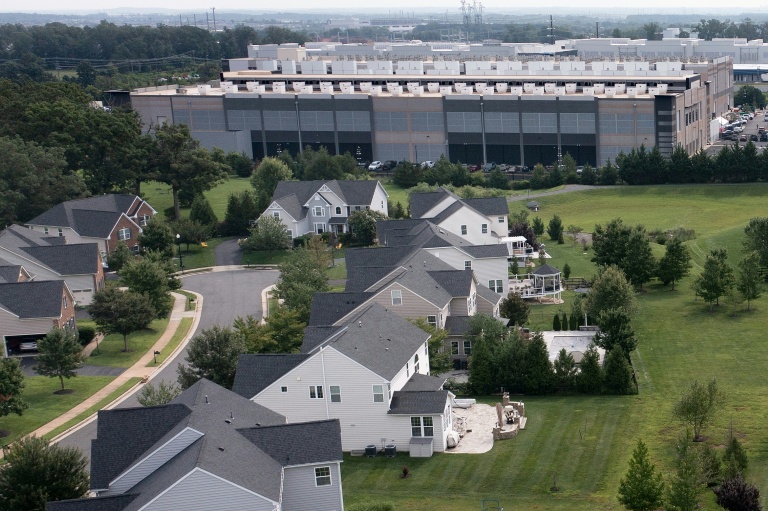
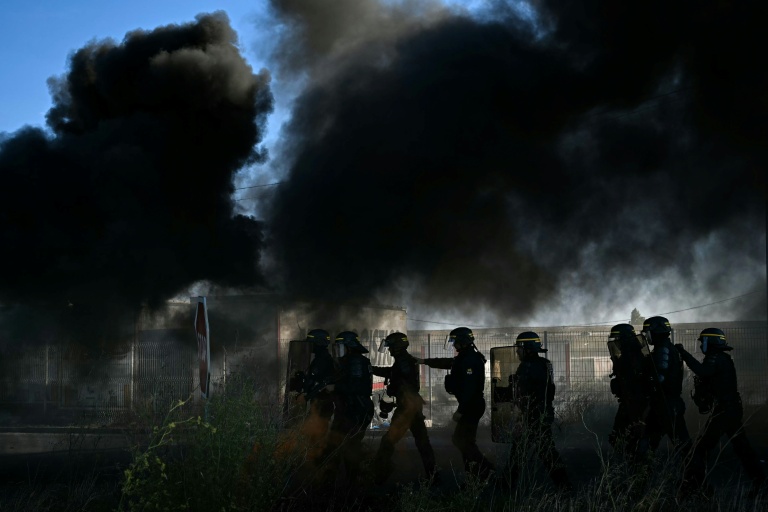
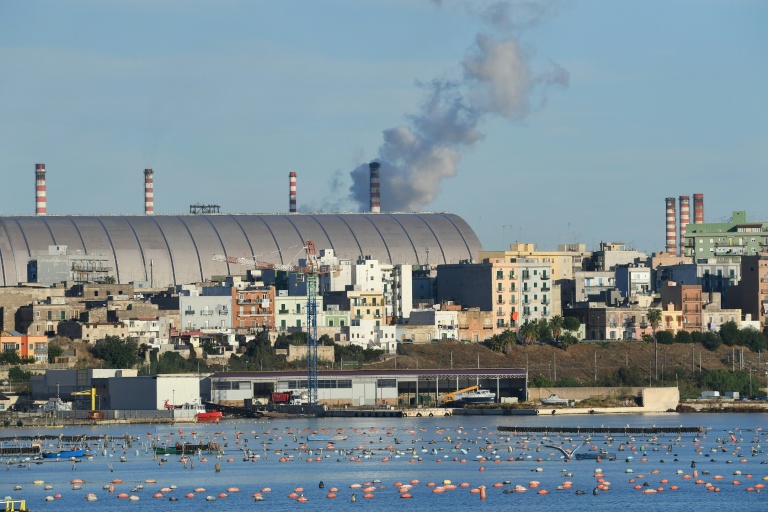
Prime Minister Giorgia Meloni’s government placed the troubled plant under state administration in February 2024 to try to protect jobs in a region with crippling unemployment and has been seeking a buyer. In the meantime, the plant formerly known as Ilva has been ordered to shut off its blast furnaces by October 28 due to the presence of asbestos and illegal levels of fine airborne particles. The site’s operator, Acciaierie d’Italia, argues that the complex cooling procedures involved in turning off the furnaces—already operating at reduced capacity—would jeopardize production at the site, which employs 8,000 workers and supports a network of contractors. The case has now gone to Italy’s highest appeals court, which will rule on October 20.
The site in the southern city of Taranto has been dogged by legal and political battles since 2012 over toxic emissions. Steel industry emissions are a major driver of climate change, with the sector responsible for around seven percent of all man-made greenhouse gas emissions. Alfredo Mantovano—a key aide to Meloni—said on Wednesday that Rome “intends to enable steel production to continue” at the site, which dates to the 1960s and is the last in Italy to produce primary steel as opposed to processing recycled steel. Offers have been made so far by Indian steelmaker Jindal Steel and US investment fund Flacks Group, while a consortium of Italian companies has submitted an expression of interest. Negotiations will continue “with the understanding that the future of steel must necessarily be green—meaning the use of electric furnaces powered by DRI (direct reduced iron),” Mantovano added. “Resources for DRI…are already available and the government intends to use them,” he further stated.
However, the USB trade union accused the government of waiting for “a solution expected to come via the tender process.” Instead, Rome should define “how many electric furnaces are needed, what public investments are planned, and—consequently—what level of employment must be guaranteed following the sale.” Expert Mapelli mentioned that it was not even clear how much steel the site should ideally be producing or where the raw materials would come from. He added that Rome could not simply task a future buyer with revamping the site. “Today, no private entrepreneur is able to cover the necessary investments using their own resources,” he said. “Steel production can only be revived through a central role played by the state.”
© 2024 AFP