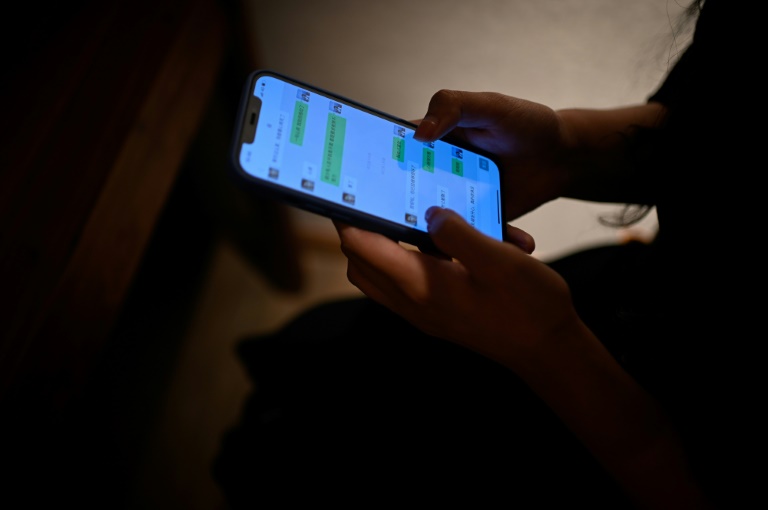


Paris (France) (AFP) – With people increasingly adopting AI to help plan their vacations, hotels are working to make sure that you check them out — and check in. Whether using ChatGPT or AI-enabled travel sites like Layla.ai, it is already possible to pose search questions like: “Calm hotel with west-facing balcony” or “Charming hotel with spa that accepts dogs.” This simple switch to plain speech searches belies major technical changes that mean hotels have to learn to become visible to AI models.
“We’re in complete upheaval: last year 35 percent of French people used artificial intelligence to find a hotel, a cafe or a restaurant,” said Nicolas Marette, founder of Custplace, a French company that helps firms optimise their digital presence. According to a recent study by the Boston Consulting Group (BCG), around 37 percent of travellers are already using AI-enabled online travel sites to plan and book trips. Hospitality industry players have taken notice. A quarter of hospitality firms “have an AI strategy that is starting to produce real returns across multiple organisational activities,” according to the BCG report.
“What a hotel needs to do to get well referenced by search engines is not the same thing that they need to do to get referenced by artificial intelligence,” said Johanna Benesty at BCG. Moreover, not all AI models “work in the same way,” she added.
– **Plain speech, elaborate task**
At French hospitality group Accor, which owns dozens of chains including Pullman, Sofitel, Mercure and Ibis, “we’ve been trying for a year already to understand how to make ourselves more relevant…and be more visible,” the group’s AI and data science chief Nicolas Maynard told a recent industry conference. But that can be a challenge as AI users see fewer options, meaning securing a top ranking becomes even more critical. “It’s a big change: with Google a search gives you 50 results…while if you ask ChatGPT it will give you five” and that is it, Maynard added.
The switch to plain speech means big changes for hotels. “The biggest challenge is to understand vague requests like ‘I want a romantic hotel in the south’,” Maynard said. Because Accor’s systems do not currently classify properties by such attributes, the group has its work cut out. “We need to adapt our systems to take semantics into account,” Maynard said.
– **Hyper detailed**
But beyond semantics, AI will allow hotels to provide customers with a wealth of information. Best Western France’s director Olivier Cohn said he believed “what will make the difference is our ability to answer client questions more thoroughly.” Hotels could respond to even the most detailed client questions such as “knowing if there is a power socket on the left side of the bed because they are used to sleeping on that side of the bed and charging their devices,” he said.
While such questions are simple in and of themselves, current systems and staff can struggle to answer in such detail, said Cohn, whose chain counts more than 4,000 hotels throughout the world. Some hotels are already deploying AI chatbots to help answer simple guest questions, allowing staff to provide higher-value services. But winning the referencing game isn’t only up to the hotels themselves. BCG notes that “algorithms elevate properties with comprehensive, high-trust, multisource information over those with sparse or inconsistent digital footprints,” meaning that client descriptions and reviews will also be important.
But just like online travel agencies (OTA) charge commissions and offer premium service for a price, AI models are already beginning to do the same. “The familiar OTA commission model will evolve into AI-era distribution fees, charged for prominence and relevance in algorithmic recommendations,” the BCG report said.
© 2024 AFP