
Paris (France) (AFP) – Here are the latest economic events in the Middle East war:
A third Turkish-owned ship has crossed the war-torn Strait of Hormuz, Turkey’s Transport Minister Abdulkadir Uraloglu said. Iran has closed the key global waterway since the US-Israeli strikes on Iran started on February 28, setting off the Middle East conflict and sending global oil and gas prices soaring. Uraloglu noted that the “Ocean Thunder,” carrying crude oil loaded from Iraq to Malaysia, safely passed through the strait overnight. Additionally, Japanese shipping firm Mitsui O.S.K. Lines reported that an Indian-flagged tanker owned by its subsidiary also passed through the Strait of Hormuz, with its crew and cargo safe.
Oil prices edged down in subdued Easter holiday trading volumes, as investors took encouragement from news of some oil tankers passing through the Strait of Hormuz. “There is definitely some sort of volumes being shipped through the strait — by far not at all normalising the commercial ship traffic — but it’s definitely a step in the right direction,” SEB analyst Ole R. Hvalbye told AFP. Around 1050 GMT, a barrel of the main Brent benchmark was off 0.8 percent at $108.20, with West Texas Intermediate down 1.4 percent at $110.01.
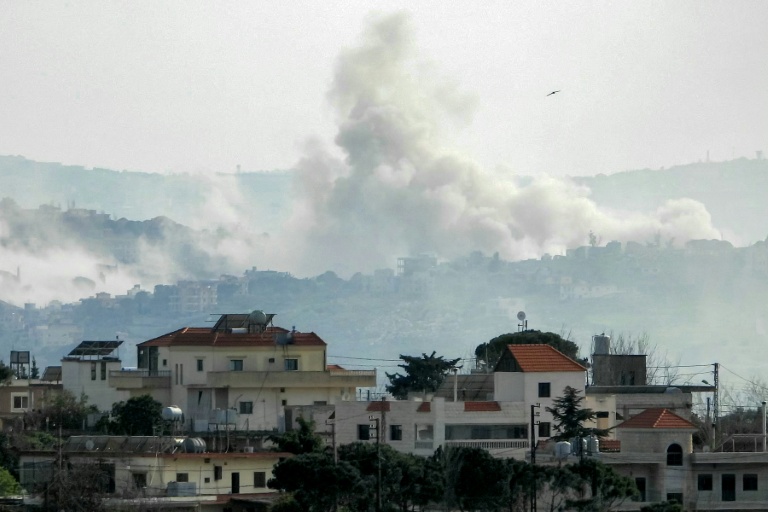
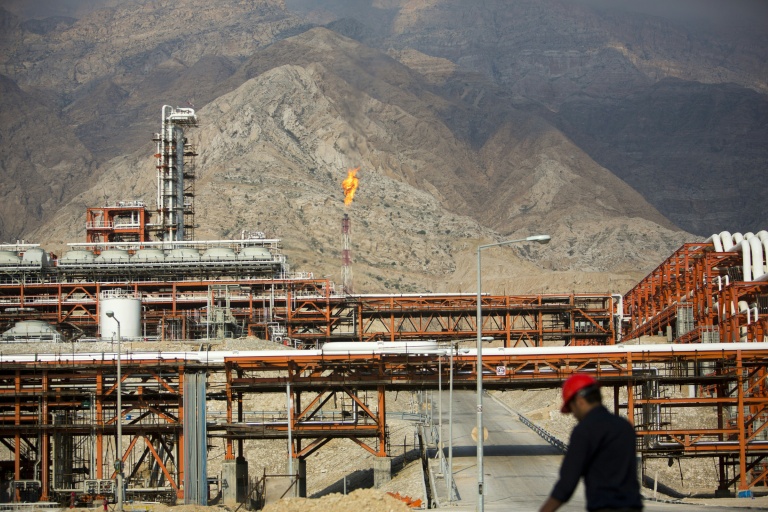
In recent developments, Defence Minister Israel Katz stated that Israel has conducted a “powerful strike” on Iran’s largest petrochemical facility in Assaluyeh, following reports of multiple explosions at the site from Iranian media. “The Israel Defense Forces have just carried out a powerful strike on Iran’s largest petrochemical facility, located in Assaluyeh — a central target responsible for about 50 percent of the country’s petrochemical production,” Katz announced.
In response to the situation, South Korea will send five Korean-flagged ships to the Saudi Arabian Red Sea port of Yanbu to help establish alternative oil supply routes and avoid disruptions in the Strait of Hormuz, according to a ruling MP. The surge in oil prices has raised growth and inflation risks for South Korea, which relies on Middle Eastern crude for around 70 percent of its imports. Likewise, Taiwan, with a similar dependence on oil imports, announced plans to redirect its ships to bring crude oil from Saudi Arabian Red Sea ports.
Furthermore, Indonesia is raising its aviation fuel surcharge by 28 percentage points and will allow airlines to increase domestic ticket prices, which are government-capped, by up to 13 percent. Economy Minister Airlangga Hartarto informed reporters that the fuel surcharge would rise from 10 to 38 percent, and the base ticket price would increase between nine and thirteen percent.
On the other hand, Sri Lanka has raised prices of liquefied petroleum gas (LPG) by nearly a quarter, following an eight percent increase last month, attributing it to higher global prices resulting from the Iran war. In addition, Sri Lanka imports all of its oil and sources coal for electricity generation. The Colombo government has warned that a prolonged war in the Middle East could seriously undermine efforts to emerge from the economic meltdown of 2022.
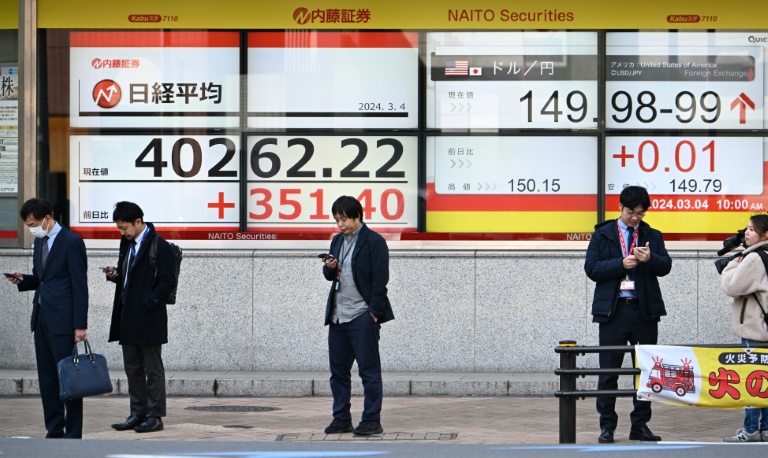
In the stock markets, Tokyo and Seoul shares closed higher, with Tokyo adding 0.6 percent and Seoul gaining 1.4 percent, respectively. Among other Asian markets open on Monday, Singapore saw a gain of 0.4 percent, while Jakarta was down 0.5 percent. Many markets in Asia and Europe were closed for Easter Monday, which coincided with China’s Qingming Festival.
© 2024 AFP