
EconomyLens.com
No Result
View All Result
Friday, September 11, 2026
  • Home
  • Economy
  • Business
  • Markets
  • Tech
  • Editorials
EconomyLens.com
  • Home
  • Economy
  • Business
  • Markets
  • Tech
  • Editorials
No Result
View All Result
EconomyLens.com
No Result
View All Result
Home Economy

Recycling contaminated soil from Fukushima: Japan’s dilemma

Thomas Barnes by Thomas Barnes
June 1, 2025
in Economy
Reading Time: 7 mins read
A A
2
24
SHARES
300
VIEWS
Share on FacebookShare on Twitter

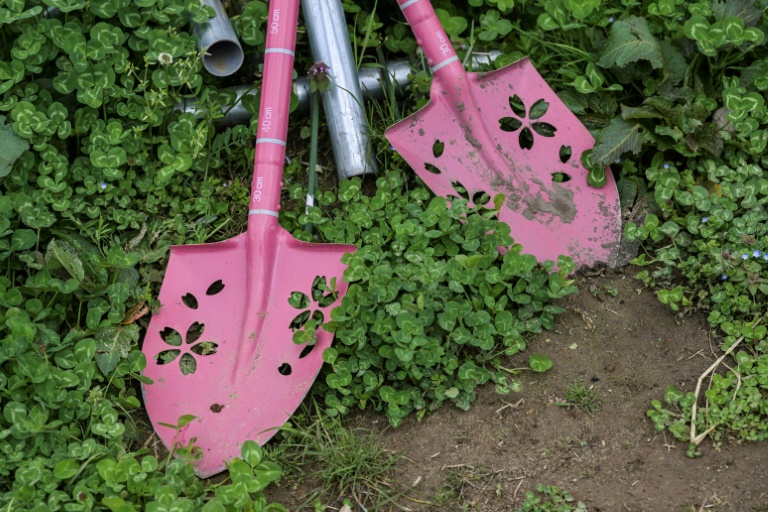
Topsoil was collected as part of large-scale decontamination efforts after the devastating meltdown at the Fukushima Daiichi nuclear plant. ©AFP

Iitate (Japan) (AFP) – To reduce radiation across Japan’s northern Fukushima region after the 2011 nuclear disaster, authorities scraped a layer of contaminated soil from swathes of land. Now, as young farmers seek to bring life back to the region once known for its delicious fruit, authorities are deliberating what to do with the mass of removed soil — enough to fill more than 10 baseball stadiums.

Related

Europe saw record summer air traffic despite Mideast war: Eurocontrol

US braces for inflation report that may push Fed to hike rates

Carney says in touch with Trump, Canada ready for ‘fair’ trade deal

What to know about Trump’s $5,000 ‘dividend’ pledge

UAE to invest 40 billion euros in Germany, including for data centres: Berlin

Here are some key things to know:

– **Why was the soil removed?**

On March 11, 2011, Japan’s strongest earthquake on record triggered a huge tsunami that hit the Fukushima Daiichi nuclear plant, causing a devastating meltdown. Topsoil was collected as part of large-scale decontamination efforts that also included blasting buildings and roads with high-pressure jets of water. Almost all areas of Fukushima have gradually been declared safe, but many evacuees have been reluctant to return because they remain worried about radiation, or have fully resettled elsewhere. Fukushima has, however, welcomed new residents such as 25-year-old kiwi farmer Takuya Haraguchi. “I want people to become interested in and learn about what Fukushima is really like these days,” he told AFP.

– **Where is the soil being stored?**

A vast quantity of soil — 14 million cubic metres — is being stored at interim storage facilities near the Fukushima Daiichi plant. The government has promised residents of Fukushima region that it will find permanent storage for the soil elsewhere in the country by 2045. For now, the huge mounds are kept inside guarded grounds, protected by layers of clean soil and a manmade sheet to prevent runoff into the environment.

– **What will Japan do with it?**

The government wants to use the soil for building road and railway embankments among other projects. It has vowed to do this outside Fukushima to avoid further burdening the region, where the crippled nuclear plant generated electricity not for local residents, but for Tokyo and its surrounding urban areas. So far few takers have been found in other parts of Japan, and some local officials suggest that realistically, a portion of the soil may need to stay in Fukushima. The prime minister’s office recently said it would symbolically recycle some of the soil to show it is safe, with reports saying it will be used in flower beds.

– **How safe is the soil?**

Around 75 percent of the stored soil has a radioactivity level equivalent to or less than one X-ray per year for people who directly stand on or work with it, according to the environment ministry. Asphalt, farm soil, or layers of other materials should be used to seal in the radioactivity, said Akira Asakawa, a ministry official working on the Fukushima soil project. In a test, the government has constructed roads and fields in Fukushima by using the contaminated soil as filling material. Those locations did not show elevated levels of radioactivity, and there was no runoff of radioactive material to surrounding areas, Asakawa said.

– **What pushback has there been?**

In 2022, local communities reacted angrily to plans floated by the national government to bring the Fukushima soil to a popular park in Tokyo and other areas near the capital. That plan has not moved forward and other locations have not yet been secured, despite public sympathy for the people of Fukushima. The environment ministry says it will step up efforts to explain the safety of its plan to the public from this year.

© 2024 AFP
Tags: agricultureenvironmentnuclear energy
Share10Tweet6Share2Pin2Send
Previous Post

‘The Matrix is everywhere’: cinema bets on immersion

Next Post

Nintendo aims to match Switch success with new console

Thomas Barnes

Thomas Barnes

Related Posts

Economy

US producer inflation tops expectations as diesel costs jump

September 11, 2026
Economy

ECB hikes borrowing costs to combat Mideast energy shock

September 10, 2026
Economy

Will Israel’s right exploit sanctions in run-up to vote?

September 10, 2026
Economy

Eurozone rate-setters to hike borrowing costs as energy prices jump

September 10, 2026
Economy

EU wants to edge out China in public contracts

September 9, 2026
Economy

Africa’s informal economy: a burden and lifeline

September 9, 2026
Next Post

Nintendo aims to match Switch success with new console

OPEC+ announces sharp increase in July oil production

In changing times, young Germans gun for defence sector jobs

Oil under $65 a boon for consumers, but a burden on producers

0 0 votes
Article Rating
Subscribe
Notify of
guest
guest
2 Comments
Oldest
Newest Most Voted
  • Trending
  • Comments
  • Latest

New York ruling deals Trump business a major blow

September 30, 2024

Elon Musk’s X fights Australian watchdog over church stabbing posts

April 21, 2024

Women journalists bear the brunt of cyberbullying

April 22, 2024

France probes TotalEnergies over 2021 Mozambique attack

May 6, 2024

New York ruling deals Trump business a major blow

104

Ghanaian finance ministry warns against fallout from anti-LGBTQ law

74

Shady bleaching jabs fuel health fears, scams in W. Africa

71

Stock markets waver, oil prices edge up

65

Europe saw record summer air traffic despite Mideast war: Eurocontrol

September 11, 2026

US inflation steady in August, fueling Fed rate hike expectations

September 11, 2026

Oil prices, US inflation stoke Fed hike worries

September 11, 2026

Investors on edge as energy costs, surging bond yields roil markets

September 11, 2026
EconomyLens Logo

We bring the world economy to you. Get the latest news and insights on the global economy, from trade and finance to technology and innovation.

Your Privacy Choices

Pages

  • Home
  • About Us
  • Privacy Policy
  • Contact Us

Categories

  • Business
  • Economy
  • Markets
  • Tech
  • Editorials

Network

  • Coolinarco.com
  • CasualSelf.com
  • Fit.CasualSelf.com
  • Sport.CasualSelf.com
  • SportBeep.com
  • MachinaSphere.com
  • MagnifyPost.com
  • TodayAiNews.com
  • VideosArena.com
© 2026 EconomyLens.com - Top economic news from around the world.
No Result
View All Result
  • Home
  • Economy
  • Business
  • Markets
  • Tech
  • Editorials

© 2024 EconomyLens.com - Top economic news from around the world.