
Abidjan (AFP) – In her quest for “fair skin”, an Ivorian YouTuber recently visited a market stall in Abidjan to receive several injections promoted as containing whitening agents.
The influencer, who asked to remain anonymous, waited 10 days in vain to see any results.
“Clearly, I’ve been ripped off,” she told AFP.
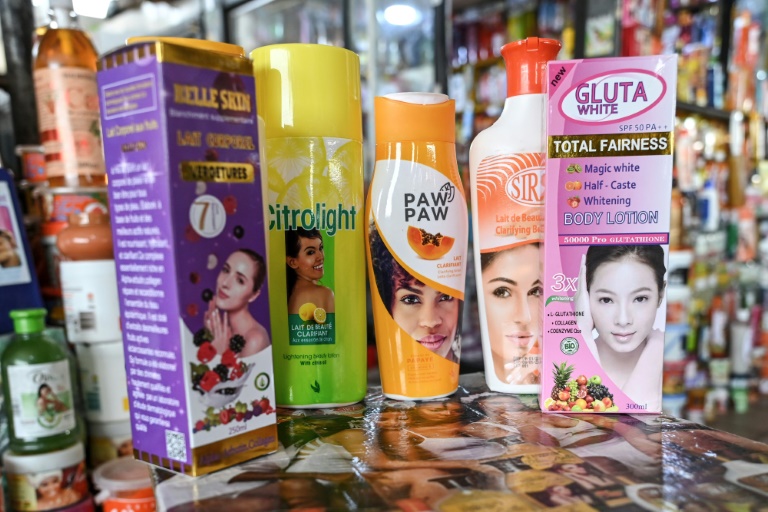
The young woman is one of a growing number of customers across West Africa who seek to reduce the melanin in their skin because being fair is associated with higher status, privilege and beauty.
The global market value for bleaching treatments is projected to jump from an estimated $10 billion in 2021 to $16 billion in 2030,
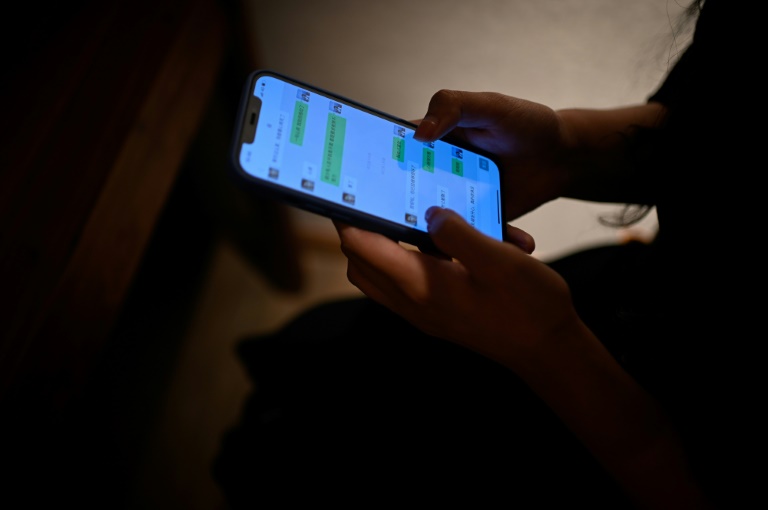
Dozens of Facebook pages in Cameroon, Ivory Coast, Niger and Senegal promise “uniform whitening” thanks to various creams or injections. It is a gateway to a huge web of scams.
A lab analysis requested by AFP of one popular product in Ivory Coast showed it contained no whitening agents. Experts also warn that the trend is far from harmless, with the World Health Organization (WHO) calling it a “global health problem that needs urgent attention” in 2023.
– ‘Significant health risk’ –
Although creams still dominate the market, injectable liquids are proving increasingly popular with young people.
The effect is thought to be “faster” and “more uniform”, according to Marcellin Doh, the president of a civil society collective in Ivory Coast fighting the skin-whitening fad.
While the risks of creams are well documented — some cause premature ageing or contain carcinogenic substances –- the dangers of injections are less well known. Specialists confirm there is little oversight regarding the ingredients or manufacturing process. Some jabs contain strong anti-inflammatories, according to dermatologist Sarah Kourouma of the Treichville University Hospital in Ivory Coast.
“Given their side effects, we assume that they are steroids,” she told AFP, adding that prolonged use in high doses can cause de-pigmentation, diabetes and hypertension.
Wealthier women, meanwhile, turn to expensive injections of glutathione, a powerful antioxidant, which can be prescribed in the treatment of cancer and Parkinson’s.
“Young, educated women aged between 25 and 30 (inject themselves) every week, sometimes every second day,” Kourouma said. They risk developing “skin pathologies such as acne and conditions that leave scars and black spots that are very hard to treat”.
Her observations were echoed by Grace Nkoro, a dermatologist at the Gynaeco-Obstetric Hospital in Cameroon.
Nkoro said she had seen several patients develop skin problems and even kidney failure after “buying these injections on the internet”.
Neighbouring Ghana issued a public health alert in 2021, warning that glutathione injections “pose a significant health risk” with “toxic side effects for the liver, kidneys and nervous system”.
– Unsafe injections –
There are also concerns over the way, in which these products are being administered. In many cases, merchants at a market or in a store will provide the jab — an “illegal practice”, according to the Ivorian Pharmaceutical Regulatory Authority. In other instances, people inject themselves at home.
The lack of medical supervision can lead to the spread of communicable diseases like hepatitis, experts caution. “If you don’t clean the equipment properly, you could potentially inject bacteria into the bloodstream and risk total body infection”, Kourouma said.
Although Ivorian authorities outlawed certain whitening products in 2015, the ban did not directly target those containing glutathione. As a result, they are still widely available in markets and online.
The manager of an Abidjan-based online store, who wished to remain anonymous, said she imported “good-quality” products from Southeast Asia, Italy and Switzerland. According to her, the jabs were “basically medicine”.
– Scam product –
AFP contacted another vendor on social media claiming to sell glutathione injections in Abidjan and purchased a batch of 16 vials and powders produced by Dermedical Skin Sciences for 75,000 CFA francs ($124).
A lab analysis by a Paris-based hospital showed the vials contained vitamins, proteins and sugar — but no glutathione.
Attempts to contact Dermedical Skin Sciences proved futile. The company website lists a lab in the Italian city of Milan but Google Maps only shows a municipal swimming pool and golf course at the given address. Moreover, there is no company registered under the name “Dermedical Skin Sciences” with the Italian Chamber of Commerce.
An Ivorian trader promoting a brand named Glutax told AFP that a wholesaler in Manila was behind the products.
The capital of the Philippines is indeed home to a dizzying number of retailers supplying the African market with skin-whitening products.
Further online searches showed the existence of a Manila-based firm called Glutax.
Contacted by AFP, the company confirmed it was headquartered in the capital and was a global distributor of bleaching treatments.
Glutathione-based injectables are banned for use in the Philippines because of their “potential danger or harm to health”.
– ‘Colonial’ legacy –
Despite the risks and scams, WHO figures show that skin-whitening practices remain widely used in Asia and Africa.
Zimbabwean researcher Shingirai Mtero of the Nordic Africa Institute said these beauty standards were “inherited from the colonial period”.
“African countries emerged from colonisation…But that does not mean that they emancipated themselves from the realities and prejudices that were imposed on them”.
© 2024 AFP