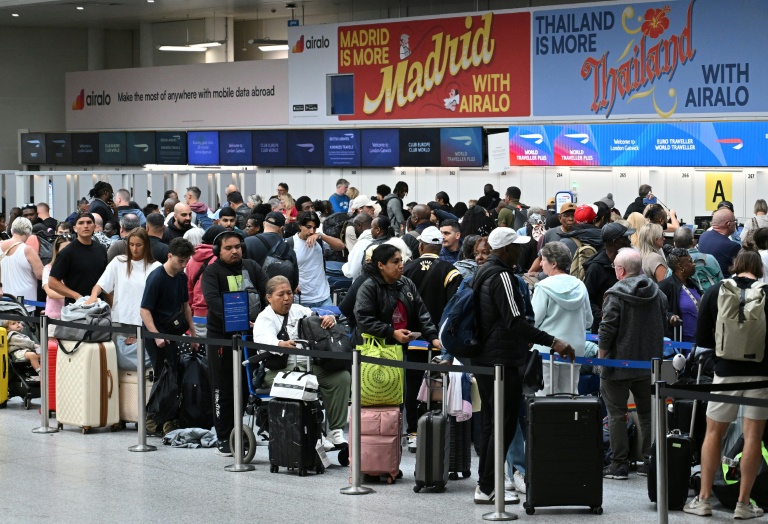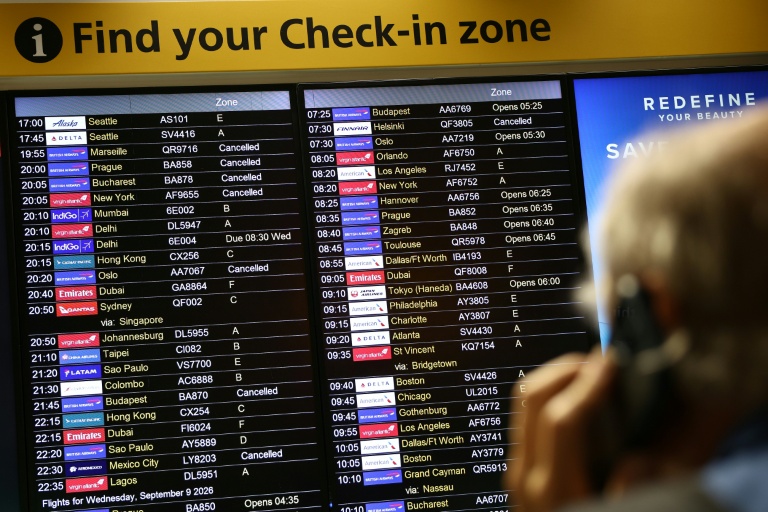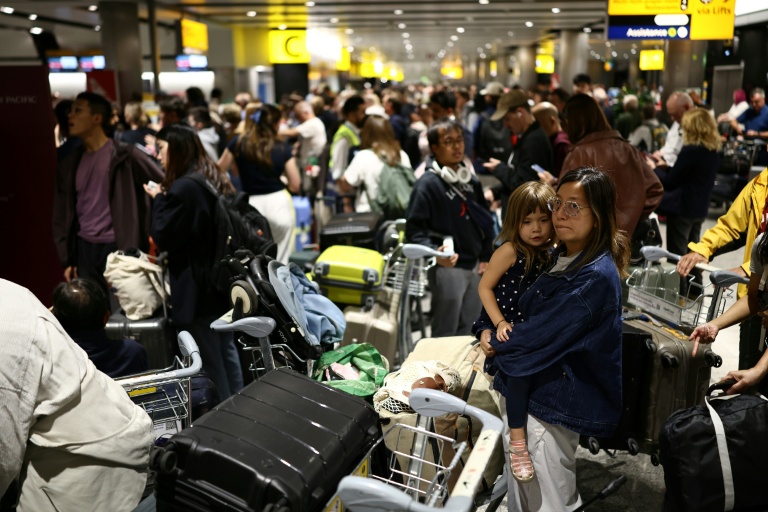

Paris (France) (AFP) – Demand for summer air travel is holding up well despite airlines hiking ticket prices, although possible shortages of jet fuel could throw a wrench in the key travel period, an industry trade body said Wednesday.
The International Air Transport Association (IATA), which unites most of the world’s leading airlines, said demand for air travel held up well in March despite the war in the Middle East. Passenger volume rose by 2.1 percent compared to March last year, while the number of flights dropped by 1.7 percent. Airlines were able to do this by increasing seat occupancy by 3.1 points to 83.6 percent.
The attacks on Iran launched by the United States and Israel on February 28 caused severe disruption in air traffic in the Gulf region. Passenger volumes in the Middle East plunged by 58.6 percent as airports were closed. But as Abu Dhabi and Dubai have become major hubs in international air travel between Asia and Europe, the impact was much wider. International passenger volumes dipped by 0.6 percent overall. Outside the Middle East, they were up by eight percent. Domestic demand increased by 6.5 percent from March last year, with seat occupancy also rising.
The closure of the Strait of Hormuz, through which a fifth of global oil normally travels, has sent energy prices soaring. Jet fuel prices have skyrocketed, and airlines have been quick to raise ticket prices. “While this has not impacted March traffic or forward bookings to date, it remains to be seen at what point high prices could start to shift passenger behavior,” IATA’s director Willie Walsh said.
“So far, the summer is shaping up to be a normally busy time for travel,” he added. The summer travel period is key for the commercial airline industry in terms of earning profits. But he noted shortages of jet fuel could emerge over the next few months in regions that depended heavily on supplies from the Middle East, especially Asia and Europe.
“Everybody’s watching what’s happening with jet fuel,” said Walsh, urging regulators to be flexible if capacity restrictions and fuel rationing need to be introduced.
© 2024 AFP