
Washington (United States) (AFP) – President Donald Trump said Sunday that US forces had safely recovered a second airman downed in Iran, calling it “one of the most daring Search and Rescue Operations in U.S. History.” Iran said it had “completely foiled” the rescue operation, without, however, saying it had captured the US serviceman or denying that US forces had extracted him. The US announcement came as Trump warned the Islamic republic had until Monday to cut a deal or face “all Hell.” The war, which erupted on February 28 with US-Israeli strikes on Iran, has engulfed the Middle East and convulsed the global economy.
Trump said on Truth Social that the airman had been “behind enemy lines in the treacherous mountains of Iran, being hunted down by our enemies.” “He sustained injuries, but he will be just fine.” This miraculous Search and Rescue Operation comes in addition to a successful rescue of another brave pilot, yesterday, which we did not confirm because we did not want to jeopardize our second rescue operation.
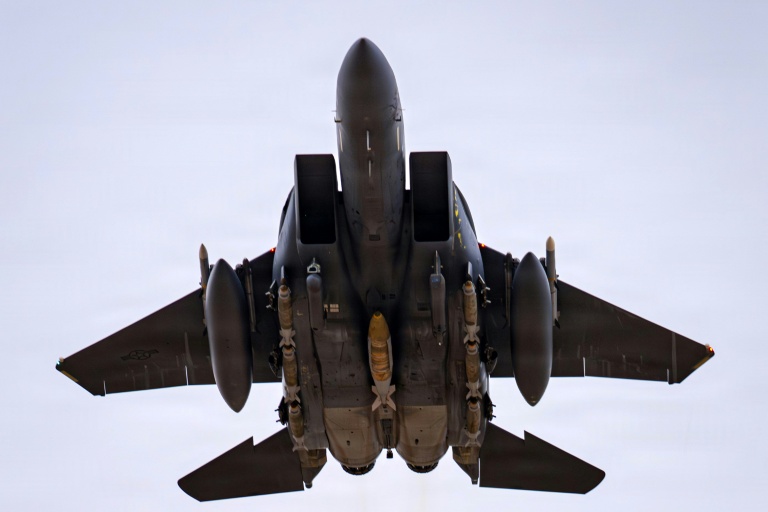
The airman, a weapon systems officer, was equipped with a pistol, a beacon, and a secure communications device to coordinate with rescuers, the New York Times reported. Two of the planes meant to transport him and his rescuers to safety were stuck in a remote base in Iran and had to be destroyed to prevent them from falling into Iranian hands, the New York Times and CBS reported. US forces then used three other transport planes to carry the airman and his rescuers out of Iran, the reports said. Iran’s military said it had destroyed four US aircraft involved in the operation, which it said had made use of an abandoned airport in southern Isfahan province. Iranian media reported five people were killed in strikes during the operation. Footage released by Iran’s Islamic Revolutionary Guard Corps was presented as showing charred wreckage of an American aircraft scattered across a desert area, with smoke still rising. Iran has said its forces downed the fighter jet from which the crew ejected, while US media reported only that the plane had been shot down. The US administration has not said publicly if it was downed or not.
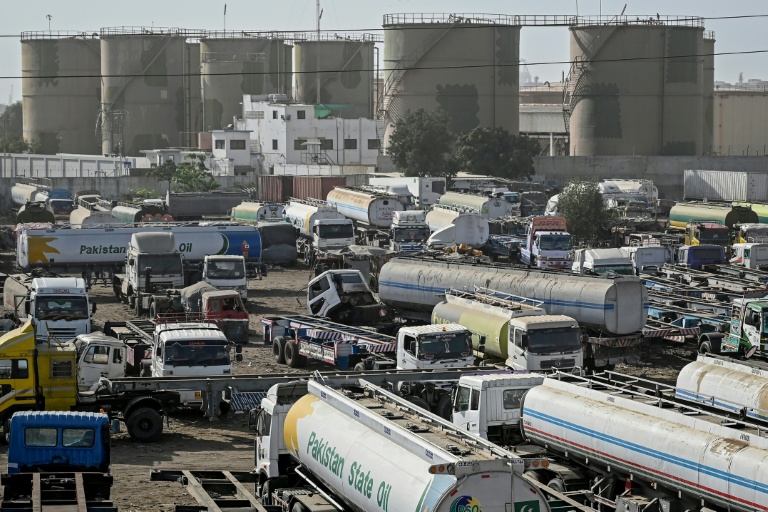
Iran has virtually blocked the Strait of Hormuz shipping lane, a vital conduit for oil and gas, and kept up a campaign of strikes on Israel and its Gulf neighbors. Oman’s state news agency said the country, which shares control over the strait with Iran, was holding talks with the Islamic republic on easing passage. “The experts from both sides put forward a number of visions and proposals regarding it,” it said. Critical infrastructure across the Gulf came under attack from Iran on Sunday, with damage reported at civilian facilities in the United Arab Emirates, Bahrain, and Kuwait. US-Israeli attacks in Iran have hit targets that are key to the Islamic republic’s economy, with a strike on a petrochemical hub in the southwest killing five people on Saturday, according to the deputy governor of Khuzestan province.
Lebanon has also been drawn into the conflict for weeks since the Iran-backed Hezbollah group began targeting Israel. Israel has struck back and pushed its ground forces into southern Lebanon. Lebanese President Joseph Aoun on Sunday reiterated a call for negotiations with Israel, saying he wanted to spare the south from destruction on the scale seen in Gaza. A source from the Lebanese civil defense told AFP that an Israeli strike on southern Lebanon’s Kfar Hatta killed a family of six waiting to evacuate and a relative who had come to pick them up. In the southern village of Debel, close to the Israeli border, inhabitants prepared to celebrate Easter Sunday despite the sound of bombardment around their village, now almost totally cut off from the world and dependent on aid deliveries. “People are terrified,” town notable Joseph Attieh told AFP by phone. “We are putting our trust in God,” Attieh said, since “this is the only glimmer of hope we will not give up on.” In the usually lively alleyways of Jerusalem’s Old City, silence reigned on Easter Sunday, with the holiday overshadowed by war and restrictions on access to the Holy Sepulchre, where the faithful commemorate Christ’s crucifixion and resurrection. In his Easter blessing at the Vatican, Pope Leo XIV urged “those who have the power to unleash wars” to “choose peace” instead and criticized global indifference to “the deaths of thousands of people.”
In Iran, a strike near the Bushehr nuclear plant on Saturday killed a guard and led Russia, which partly constructed the facility and helps operate it, to announce it was evacuating 198 workers and to condemn the strike as “an evil deed.” Iranian Foreign Minister Abbas Araghchi warned that continued attacks on the plant on the southern coast could eventually lead to radioactive fallout that would “end life in GCC (Gulf Cooperation Council) capitals, not Tehran.” Bushehr is considerably closer to Kuwait, Bahrain, and Qatar than it is to the Iranian capital. Rafael Grossi, head of the International Atomic Energy Agency (IAEA), wrote on X that no increase in radiation levels had been reported at the site, but nonetheless voiced “deep concern” at what he said was the fourth such strike in recent weeks.
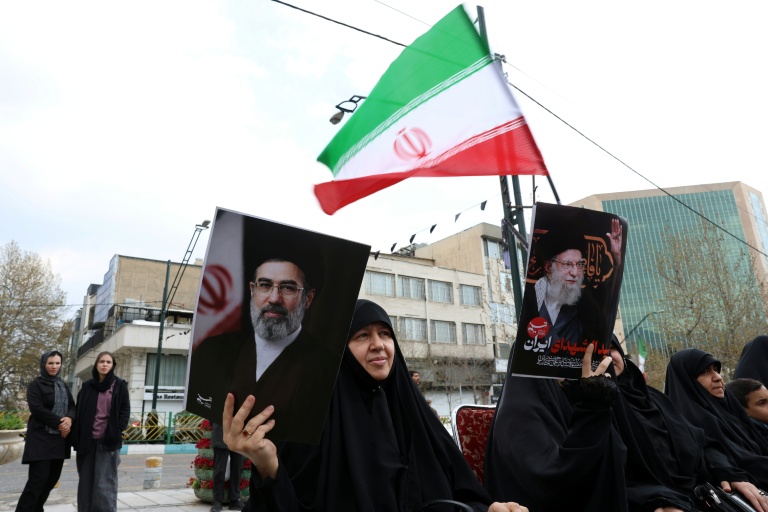
Against the backdrop of war, Iran has kept up a crackdown weeks after it quelled a massive wave of anti-government protests, with the judiciary announcing the execution of two men convicted of acting on behalf of Israel and the United States. On Sunday, communications monitor Netblocks said Iran’s internet blackout was now the longest nationwide shutdown in history.
© 2024 AFP