
Kyiv (Ukraine) (AFP) – Russian attacks on Ukraine’s energy grid this winter could do “much more significant” damage to the country than in previous years, the head of Ukraine’s largest power company warned in an interview with AFP. Moscow has been bombarding power stations across the country in waves of ballistic and cruise missile attacks, cutting power and heating to millions of people as temperatures plunge. Fears are high across the country that this winter could be tougher than ever before, with Russia seeking to trigger a humanitarian disaster that would leave Ukrainians questioning whether fighting on is worth the costs.
Ukraine’s stretched air defenses are struggling to cope with the barrages, Maxim Timchenko, chief executive of the power company DTEK, said in an interview. “The difference from last year is that the scale of these attacks is much, much, much bigger,” Timchenko said. He explained that Russian forces were now firing “six, seven ballistic missiles, 25 cruise missiles and dozens of drones” at a single power station. Russia is using twice as many ballistic missiles—fast-moving and almost impossible for Ukraine’s domestic air defenses to intercept—as in previous years, Timchenko added.
Kyiv instead relies on advanced interceptors like the US-made Patriot systems, but they are in short supply and President Volodymyr Zelensky has been urging allies to step up their deliveries. Russia is also targeting transmission lines and substations, Timchenko said, so that even when plants are operational, households and businesses are still cut off. “Unfortunately they’re successful in these attacks,” he said.
As for the power stations themselves, many of those that have been hit by Russia in recent weeks will be offline until at least next summer, and some “will take even more time,” Timchenko added. And if the ballistic missile attacks continue, the damage will be “much more significant than last year,” he said. He further stated that Russia was trying to force a “humanitarian disaster,” with the capital Kyiv an “obvious and primary target.”
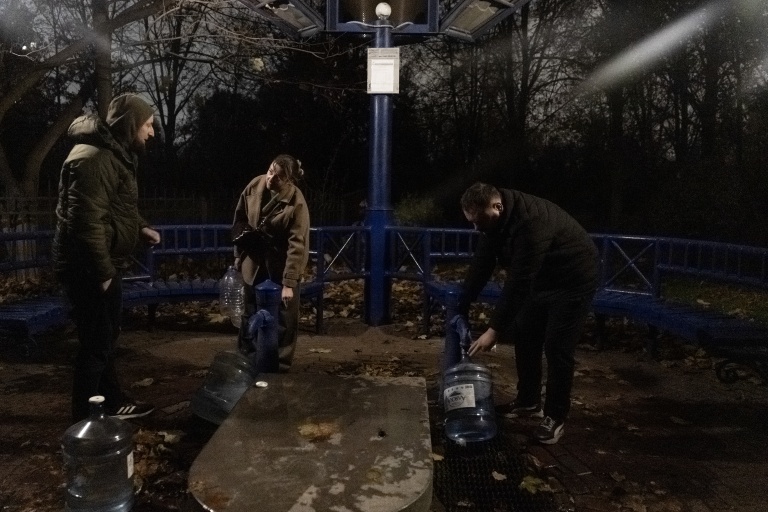
Last winter, one in every two apartment blocks in the capital was cut off from heating in temperatures as low as -20C. Millions were without electricity, while others were limited to just a few hours a day. Locals who could afford it bought up generators or installed solar panels on their roofs. Others slept in tents and sleeping bags in their living rooms as indoor temperatures dropped, and water pipes would freeze and burst.
© 2024 AFP