
EconomyLens.com
No Result
View All Result
Monday, May 11, 2026
  • Home
  • Economy
  • Business
  • Markets
  • Tech
  • Editorials
EconomyLens.com
  • Home
  • Economy
  • Business
  • Markets
  • Tech
  • Editorials
No Result
View All Result
EconomyLens.com
No Result
View All Result
Home Economy

AI making cyber attacks costlier and more effective: Munich Re

Emma Reilly by Emma Reilly
March 25, 2026
in Economy
Reading Time: 4 mins read
A A
3
25
SHARES
311
VIEWS
Share on FacebookShare on Twitter

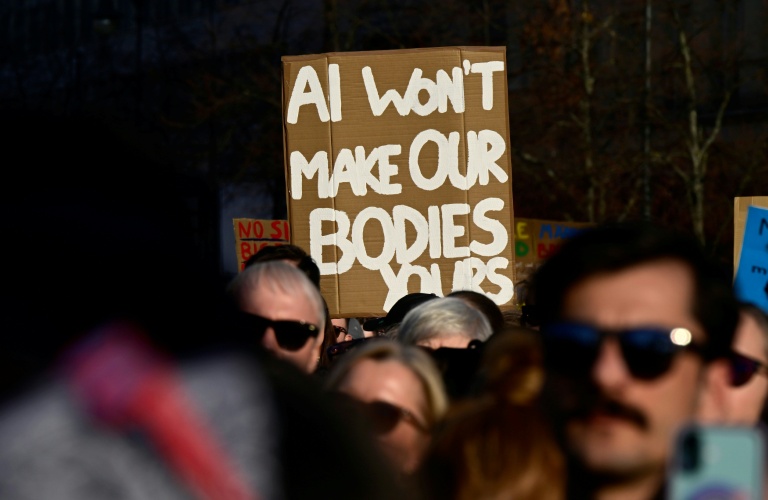
Demonstrators took to streets in Berlin earlier this week to protest AI being used to create sexually-explicit deepfakes . ©AFP

Frankfurt (Germany) (AFP) – Artificial intelligence is making cyberattacks increasingly sophisticated and costlier for businesses, reinsurer Munich Re said Wednesday, warning of methods ranging from highly personalised phishing emails to computer-generated, convincing fake identities. “If cybercrime were a country, it would be the third-largest economy in the world,” behind only the United States and China, the reinsurer said in a report. Citing figures from market analysis firm Statista, Munich Re projected cybercrime will generate global losses of some $14 billion (12.07 bn euros) in 2028.

Related

Trump to suspend US gas tax as Iran war spikes prices

Macron announces 23 bn euros of investment at Africa summit

No end to war in sight as Iran and US reject talks terms

War in the Middle East: latest developments

Macron arrives in Kenya ahead of Africa summit

Martin Kreuzer, head of cyber risks at Munich Re, told AFP that “automation now plays a central role,” enabling attackers to operate “efficiently and in a more targeted way.” “They rely on highly personalised phishing emails, automatically generated malware, and synthetic identities that appear deceptively real,” he said. The trend of “agentic AI” means the advent of systems that can “act autonomously, make decisions, and even circumvent defensive mechanisms,” according to Kreuzer.

The most widespread cyberattacks are still ransomware, in which hackers lock systems and demand money to release them. Munich Re’s study says that the number of publicly reported attacks of this kind “increased by nearly 50 percent in 2025 and…continue unabated in 2026.” Coordinated attacks via networks of hijacked devices, used to overwhelm systems, also more than doubled in 2025 and are becoming more common thanks to services available for hire.

At a more advanced level, criminals are collaborating with states, concealing the origin of attacks and accelerating their global operations. “Nation-state actors are among the most professional players in the cyber threat landscape,” said Kreuzer. “Here we are seeing both an evolution of tools and methods, and the emergence of hybrid warfare driven by geopolitical motives,” he said, adding that “disinformation is increasingly being used as a weapon.”

The study notes that while attacks on large businesses attract most public attention, “the majority of cyber incidents and claims affect micro-companies and SMEs.” Compared with risks from natural catastrophes, for which almost half of all losses were insured in 2025, Kreuzer said that “cyber risk coverage is still far too low, with only a fraction insured.”

© 2024 AFP
Tags: artificial intelligencecybersecurityransomware
Share10Tweet6Share2Pin2Send
Previous Post

IEA chief says ‘ready’ to release more oil reserves if needed

Next Post

War-linked power crunch pushes Sri Lanka to four-day week

Emma Reilly

Emma Reilly

Related Posts

Economy

Oil giant Saudi Aramco says quarterly profits up as crude prices surge

May 11, 2026
Economy

Soaring energy profits reignite calls for windfall tax

May 11, 2026
Economy

Spirit exit likely to lead to higher US airfares, experts say

May 11, 2026
Economy

Poland signs 44-bn-euro EU defence loan deal to modernise military

May 9, 2026
Economy

Rubio says expecting Iran response to US proposal on Friday

May 8, 2026
Economy

Toyota sees profit drop as US tariffs, Mideast bite

May 7, 2026
Next Post

War-linked power crunch pushes Sri Lanka to four-day week

Hungary says will phase out gas deliveries to Ukraine

Aviation, tourism, agriculture... the economic sectors hit by the war

Mideast war sparks long queues at Kinshasa petrol stations

0 0 votes
Article Rating
Subscribe
Notify of
guest
guest
3 Comments
Oldest
Newest Most Voted
Inline Feedbacks
View all comments
  • Trending
  • Comments
  • Latest

New York ruling deals Trump business a major blow

September 30, 2024

Elon Musk’s X fights Australian watchdog over church stabbing posts

April 21, 2024

Women journalists bear the brunt of cyberbullying

April 22, 2024

France probes TotalEnergies over 2021 Mozambique attack

May 6, 2024

New York ruling deals Trump business a major blow

97

Ghanaian finance ministry warns against fallout from anti-LGBTQ law

74

Shady bleaching jabs fuel health fears, scams in W. Africa

71

Stock markets waver, oil prices edge up

65

Trump says Mideast truce on ‘life support’ after rejecting Iran stance

May 11, 2026

Trump to suspend US gas tax as Iran war spikes prices

May 11, 2026

Macron announces 23 bn euros of investment at Africa summit

May 11, 2026

Dua Lipa sues Samsung in US over use of her likeness on TV box

May 11, 2026
EconomyLens Logo

We bring the world economy to you. Get the latest news and insights on the global economy, from trade and finance to technology and innovation.

Pages

  • Home
  • About Us
  • Privacy Policy
  • Contact Us

Categories

  • Business
  • Economy
  • Markets
  • Tech
  • Editorials

Network

  • Coolinarco.com
  • CasualSelf.com
  • Fit.CasualSelf.com
  • Sport.CasualSelf.com
  • SportBeep.com
  • MachinaSphere.com
  • MagnifyPost.com
  • TodayAiNews.com
  • VideosArena.com
© 2025 EconomyLens.com - Top economic news from around the world.
No Result
View All Result
  • Home
  • Economy
  • Business
  • Markets
  • Tech
  • Editorials

© 2024 EconomyLens.com - Top economic news from around the world.