
Hong Kong (AFP) – Stocks rose Tuesday after Donald Trump delayed strikes on Iranian energy sites and hailed “very good” talks with Tehran, but oil prices rebounded as optimism over a possible de-escalation of the Middle East war remained shaky.
Equity markets in New York jumped and crude plunged Monday after the US president made the surprise announcement that he would hold off fresh attacks on energy infrastructure for five days following negotiations with an unidentified “top person.” The news ramped up hopes for an end to the conflict and the reopening of the Strait of Hormuz, through which about a fifth of global oil and gas normally flows. Brent slumped as much as 14 percent at one point to $96, while all three main indexes on Wall Street climbed more than one percent, with commentators suggesting prices could drop to as low as $90.
However, the mood was deflated somewhat after Iranian media said there had been no talks between Tehran and Washington. The Fars news agency reported that Deputy Speaker of Parliament Ali Nikzad said there would be no talks, while the Strait of Hormuz would remain effectively closed. “The signal here is clear,” said Pepperstone’s Michael Brown. “Trump has pulled back on the ultimatum issued over the weekend, is seemingly seeking de-escalation for the first time since conflict began, and looks to be trying to find an off-ramp to allow that to happen. To me, this is by far the most important part of all this.”
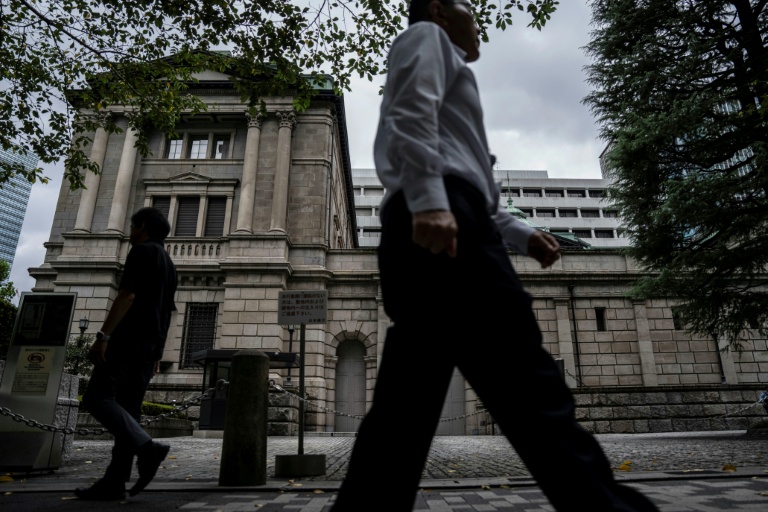
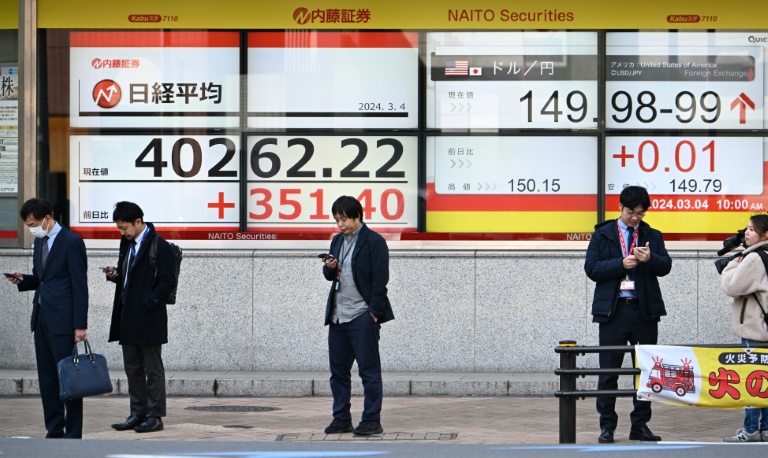
Asian markets enjoyed a positive day, with Tokyo, Hong Kong, Shanghai, Sydney, Seoul, Singapore, Bangkok, Mumbai, and Manila all up. Taipei and Wellington both fell. London, Paris, and Frankfurt edged up at the open. Crude bounced, with Brent and WTI both climbing more than four percent at one point, although investors remained sceptical about the chances of a breakthrough in talks. There was little reaction to Japanese Prime Minister Sanae Takaichi stating that the country would release another part of its strategic oil reserves from Thursday.
On currency markets, the dollar climbed against the euro, pound, and yen after sinking on Monday. Markets had started the week deep in the red after Trump warned Saturday that Iran had 48 hours to allow traffic through Hormuz or he would strike the country’s energy infrastructure. Tehran replied by saying the waterway “will be completely closed” should he act on his threat. His decision to U-turn hours before the deadline came up was pounced on by observers as another example of a TACO moment—an acronym of “Trump Always Chickens Out”—in which he escalates before pulling back from the brink.
However, Stephen Innes at SPI Asset Management warned that the president may have overplayed his hand. “You can talk down a market. You can jawbone crude lower. You can release emergency reserves and tweak sanctions to flood the tape with supply optics,” he wrote. “But you cannot instantly repair disrupted shipping lanes, fractured refining capacity, or the insurance black hole forming around tanker traffic. The market may trade the headline in the short term, but it settles on the barrel in the medium term. And right now, the barrel is still constrained.”
Meanwhile, the Wall Street Journal reported that Saudi Arabia and the United Arab Emirates were considering joining the fight following persistent and damaging attacks from Iran since the US-Israel strikes began on February 28. The article indicated they were not deploying troops, but pressure was building on them to do so as Tehran looked to exert greater sway over the region. Iran’s choking of the Strait of Hormuz continued to impact airlines, with Vietnam’s national air carrier stating it will suspend nearly two dozen domestic flights a week starting next month because of limited fuel supplies. That came days after Myanmar’s national carrier also announced cancellations of some domestic flights “due to unavoidable circumstances,” without providing details.
Additionally, Hong Kong’s Cathay Pacific extended its flight suspensions to and from Dubai and Riyadh by a month until May 31. Elsewhere, the European Union and Australia struck a long-awaited free trade deal on Tuesday as they completed years of negotiations to boost exports in the face of global uncertainty over trade. They also signed an agreement to step up defence cooperation as well as critical raw materials.
– Key figures at around 0815 GMT –
Brent North Sea Crude: UP 1.9 percent at $101.90 per barrel
West Texas Intermediate: UP 2.9 percent at $90.00 per barrel
Tokyo – Nikkei 225: UP 1.4 percent at 52,252.28 (close)
Hong Kong – Hang Seng Index: UP 2.8 percent at 25,063.71 (close)
Shanghai – Composite: UP 1.8 percent at 3,881.28 (close)
London – FTSE 100: DOWN 0.2 percent at 9,917.66
Euro/dollar: DOWN at $1.1600 from $1.1616 on Monday
Pound/dollar: DOWN at $1.3420 from $1.3437
Dollar/yen: UP at 158.50 yen from 158.34 yen
Euro/pound: DOWN at 86.43 pence from 86.45 pence
New York – Dow: UP 1.4 percent at 46,208.47 points (close)
© 2024 AFP