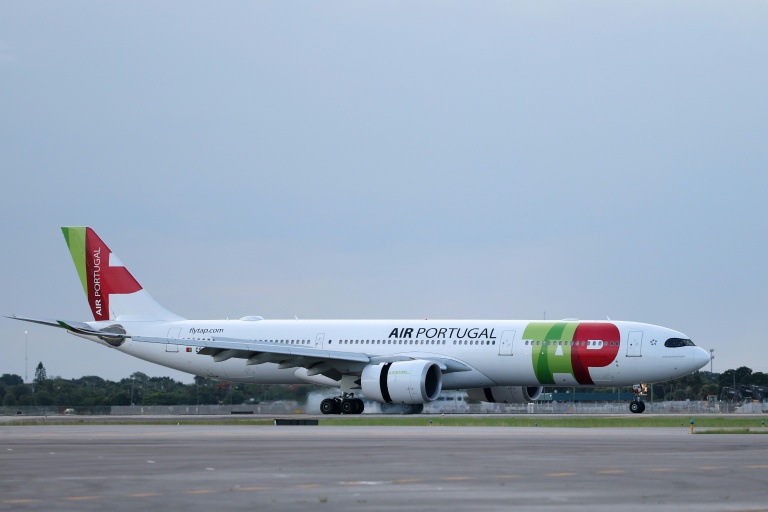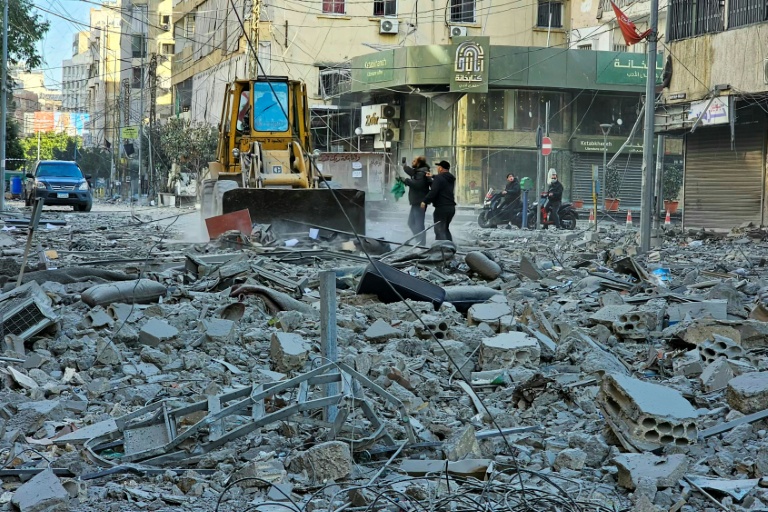

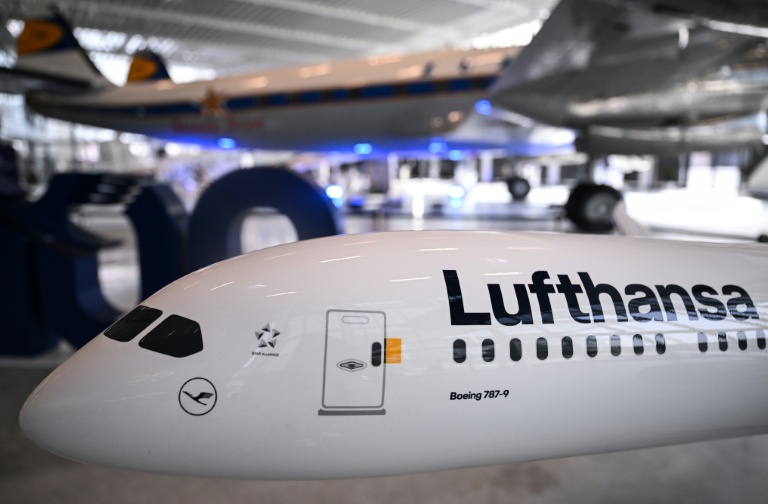
Frankfurt (Germany) (AFP) – German aviation giant Lufthansa warned Friday it faced a more uncertain outlook because of the unfolding Middle East conflict, and that the fallout showed how vulnerable air traffic remains to geopolitical shocks. The war, which began last weekend with US-Israeli attacks on Iran, triggering retaliatory strikes from the Islamic republic, has caused the biggest disruption to air travel since the Covid pandemic.
With airspace closed and transit hubs in the Gulf disrupted, Lufthansa also said it was scrambling to put on extra long-haul flights as demand surges from passengers looking for alternative routes. “The war in the Middle East proves once again how exposed air traffic is and how vulnerable it remains, even though the industry is now more resilient to crises than it used to be,” Lufthansa CEO Carsten Spohr said, as the group announced its 2025 results. “The massive concentration of global traffic flows via the Gulf hubs is increasingly proving to be a geopolitical Achilles’ heel.”
On its outlook for this year, the group—which operates Eurowings, Austrian, Swiss and Brussels Airlines and has acquired a stake in Italy’s ITA—cautioned profit predictions were now more difficult. “Developments in the Middle East and the associated geopolitical consequences for the global economy increase the medium- and long-term forecast uncertainty,” said Lufthansa, which is Europe’s biggest airline group by sales.
Talking to reporters later, Spohr said Lufthansa was seeing “an enormous increase” in demand for long-haul flights to Asia and Africa because of major disruption at hubs like Dubai and Doha. “We are examining how we can respond to the situation by operating short-notice special flights,” he said, adding that destinations would include Bangkok, Singapore, and India. “We don’t have an unlimited number of aircraft…but will now deploy and schedule those that we can at short notice.”
Lufthansa is also joining efforts to evacuate thousands of German tourists stranded in the Middle East by organizing some flights to bring them home, the CEO said. Another risk that Lufthansa flagged was “volatility” on oil markets as the conflict sends prices—including of jet fuel—sharply higher. However, chief financial officer Till Streichert played down the risk, saying the firm had a “solid hedging strategy” that should shield it from price fluctuations. Before the outbreak of the war, airlines had been benefiting from relatively lower oil prices.
In terms of its financial performance, Lufthansa reported a forecast-beating operating profit of 1.96 billion euros ($2.27 billion) for 2025, which is around 20 percent higher than the previous year. The news initially sent the group’s shares up more than three percent in Frankfurt before they pulled back to trade around 0.5 percent higher. Revenues rose five percent to 39.6 billion euros, while the group’s airlines carried 135 million passengers, an increase of three percent from 2024.
The results marked an improvement over 2024, when profits plummeted due to the impact of strikes, aircraft delivery delays, and rising costs. Lufthansa has described 2025 as a “transitional year,” with a wide-ranging turnaround program underway, particularly at its main carrier. The group is cutting 4,000 jobs, mainly administrative roles in Germany. Spohr emphasized that the turnaround efforts were making progress, with the flagship carrier returning to profit, and stressed that it will remain a “top priority.”
© 2024 AFP