
EconomyLens.com
No Result
View All Result
Tuesday, September 29, 2026
  • Home
  • Economy
  • Business
  • Markets
  • Tech
  • Editorials
EconomyLens.com
  • Home
  • Economy
  • Business
  • Markets
  • Tech
  • Editorials
No Result
View All Result
EconomyLens.com
No Result
View All Result
Home Economy

‘We just need rain’: Germany’s Rhine river hits new low

David Peterson by David Peterson
September 29, 2026
in Economy
Reading Time: 5 mins read
A A
0
19
SHARES
236
VIEWS
Share on FacebookShare on Twitter

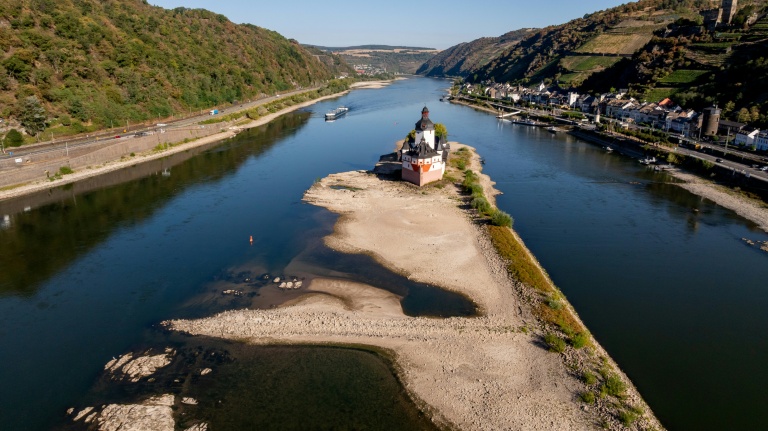
Kaub on the Rhine river in mid-August. The waterway has fallen to record lows amid low rainfall and soaring temperatures. ©AFP

Frankfurt (Germany) (AFP) – Parts of Germany’s Rhine are now unnavigable for most shipping, an industry group warned Tuesday, after the river dropped to an all-time record low following months of little rainfall and hot weather. The waterway, which flows through the industrial heartland of Germany, has been at record lows since late July when Europe was struggling through a series of heatwaves. It has already led to some restrictions on commercial shipping, affecting industries from chemicals to steel-making, and heaping extra pressure on Europe’s long-stagnant top economy.

Related

Spain to cap gas price hikes, extend fuel discounts

UK decides against charging foreign visitors for museums

Australian central bank lifts key interest rate to 15-year high

Ukraine to postpone some spending amid delays in aid: PM

Madrid housing protesters vow to maintain pressure on government

But continued dry weather this week pushed water levels at Kaub on the Rhine — a reference point for vessels — even further downwards and made the area impassable for laden cargo vessels. “Most German ship captains say, that’s too shallow, I’m not sailing there anymore,” Matthias Roeser, from the German Inland Shipping Association, told AFP. The navigable depth of the river around Kaub was just over a metre Tuesday. Only specially adapted vessels, or those carrying almost no cargo, can navigate such low waters.

This means the Rhine has effectively been split into two sections, Thomas Puls, a transport expert from the IW Economic Institute in Cologne, told AFP. The upper and middle sections of the river in Germany are cut off from major northern ports such as Duisburg in Germany and Rotterdam in the Netherlands. “The problem here is simply that it has been raining far, far, far too little for months,” Puls said. “We just need rain — nothing else helps.”

Companies including steel giant Thyssenkrupp and chemical maker BASF have already resorted to using specially adapted vessels in recent weeks to transport products. Only around five percent of goods are transported by river in Germany. But the Rhine plays an outsized role, carrying around two-thirds of Germany’s inland waterway freight, said Puls. The government last month lifted a ban on trucks driving on Sundays and public holidays to help companies impacted by the problems. This measure was reportedly extended Tuesday.

But Puls said switching goods transport from shipping to trucks is difficult, as many trucks are typically required to carry the cargo of a single commercial vessel. Ships on the Rhine carry large cargoes of goods such as petroleum products. Puls said climate change meant the frequency of such low water events would increase. He urged authorities to take measures, such as using more shallow-draught ships adapted for low waters, to “strengthen resilience.”

© 2024 AFP

Tags: climate changedroughtshipping
Share8Tweet5Share1Pin2Send
Previous Post

Spain to cap gas price hikes, extend fuel discounts

Next Post

Stocks move sideways despite oil moving lower

David Peterson

David Peterson

Related Posts

Economy

White House releases list of products US, China could tax less

September 27, 2026
Economy

Turkey ex-minister resigns as investment fund crisis grows

September 27, 2026
Economy

Iran stands firm on Hormuz plan after US rejection

September 27, 2026
Economy

Italy winemakers hail bumper harvest but cut output

September 26, 2026
Economy

Kyiv shoppers feel the pinch from Russian strikes

September 28, 2026
Economy

Trump rejects Iran proposal for deal to reopen Hormuz

September 26, 2026
Next Post

Stocks move sideways despite oil moving lower

0 0 votes
Article Rating
Subscribe
Notify of
guest
guest
0 Comments
Oldest
Newest Most Voted
  • Trending
  • Comments
  • Latest

New York ruling deals Trump business a major blow

September 30, 2024

Elon Musk’s X fights Australian watchdog over church stabbing posts

April 21, 2024

Women journalists bear the brunt of cyberbullying

April 22, 2024

France probes TotalEnergies over 2021 Mozambique attack

May 6, 2024

New York ruling deals Trump business a major blow

104

Ghanaian finance ministry warns against fallout from anti-LGBTQ law

74

Shady bleaching jabs fuel health fears, scams in W. Africa

71

Stock markets waver, oil prices edge up

65

Stocks move sideways despite oil moving lower

September 29, 2026

‘We just need rain’: Germany’s Rhine river hits new low

September 29, 2026

Spain to cap gas price hikes, extend fuel discounts

September 29, 2026

UK decides against charging foreign visitors for museums

September 29, 2026
EconomyLens Logo

We bring the world economy to you. Get the latest news and insights on the global economy, from trade and finance to technology and innovation.

Your Privacy Choices

Pages

  • Home
  • About Us
  • Privacy Policy
  • Contact Us

Categories

  • Business
  • Economy
  • Markets
  • Tech
  • Editorials

Network

  • Coolinarco.com
  • CasualSelf.com
  • Fit.CasualSelf.com
  • Sport.CasualSelf.com
  • SportBeep.com
  • MachinaSphere.com
  • MagnifyPost.com
  • TodayAiNews.com
  • VideosArena.com
© 2026 EconomyLens.com - Top economic news from around the world.
No Result
View All Result
  • Home
  • Economy
  • Business
  • Markets
  • Tech
  • Editorials

© 2024 EconomyLens.com - Top economic news from around the world.