
Dubai (AFP) – In a supermarket in Bahrain, Mahmoud Ali fills his cart as usual. The shelves remain stocked despite the war in the Middle East, but the blockade of the main shipping routes into the Gulf is now being felt at checkout. “There’s no shortage,” but over the past few days “there has been a noticeable increase in the price of certain food products,” the father of four said. The price of meat in particular has almost doubled, he added.
Like most of its neighbours in this arid region, the small Gulf monarchy depends heavily on imports, especially for its food supply. But the war, triggered on February 28 by Israeli-US strikes against Iran, has severely disrupted the transport of goods through the strategic Strait of Hormuz, which is effectively closed. “Most major ports in the UAE, Qatar, Kuwait and Bahrain have suspended or heavily reduced cargo processing,” said economist Frederic Schneider from the Middle East Council on Global Affairs. Air transport, another logistical pillar of the region, is also running below capacity because of daily Iranian drone and missile attacks, he added.
With the main gateways to the Gulf — the ports of Abu Dhabi, Jebel Ali in Dubai and Dammam in eastern Saudi Arabia — almost inaccessible, ships are turning to others located south of the strait in Oman and the Emirates. Saudi Arabia has also positioned itself as a key supply hub at the heart of the Gulf region, as its airspace remains open and maritime traffic to its Red Sea ports continues. To address the disruption of traffic in the ports along the Gulf coast, the kingdom has launched a new initiative to strengthen its transport networks by adding logistics routes and operational corridors to handle containers and cargo diverted from the country’s eastern ports, according to officials in the transport sector.
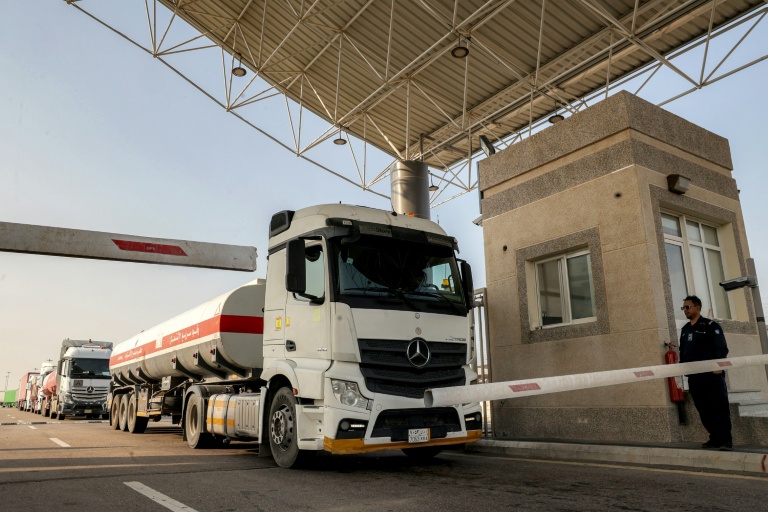
AFP journalists recently saw a stream of heavy trucks crossing the border with Qatar. Other land-based alternatives exist, including road corridors linking to the Mediterranean through Syria or Jordan. But these overland routes are too congested, expensive, and insufficient to make up for the paralysis of traditional routes, Schneider said. Fresh products, most of which are imported from Asia and cannot be stored for long, are the first to be affected.
Faced with this situation, the Gulf states are not on equal footing. Saudi Arabia has direct access to the Red Sea. The United Arab Emirates claims to have four to six months of stock. And Qatar has invested heavily in its strategic reserves, following the three-year blockade imposed by its neighbours in 2017. Bahrain and Kuwait, on the other hand, are already seeing consumers paying the price for the conflict.
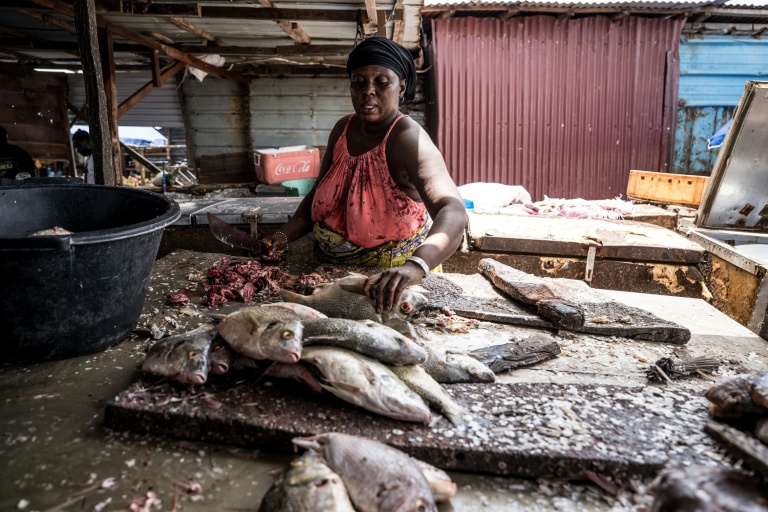
After a rush on supermarkets in the first days of the war, Kuwaiti authorities froze the prices of certain basic products and subsidised meat imports. “Overall, prices have remained stable,” an official from the Kuwaiti commerce ministry told AFP, speaking on condition of anonymity. “But an increase of more than 30 percent was recorded for meat and fish,” which were affected by the suspension of fishing in the Gulf and the halt of imports from Iran, India, and Pakistan, he said.
The private sector is also trying to contain the impact of the blockade. The Lulu retail chain, which has 280 supermarkets in the region, said it maintains four to six months of reserve stock of non-perishables and has chartered special flights to fly in fruit, vegetables, meat, seafood, and poultry. So far, “37 special chartered flights have brought in more than 6,000 tons of fresh produce,” its communications director V. Nandakumar told AFP, adding that the additional cost was “not going to be passed on to the consumer as of now.”
According to Schneider, “there is a certain level of preparedness and prices are elevated but under control for the moment.” However, “as the war does not seem to end soon, there is a tangible risk of a price spiral on imported goods, in particular food,” he added.
© 2024 AFP